Last updated November 23, 2026
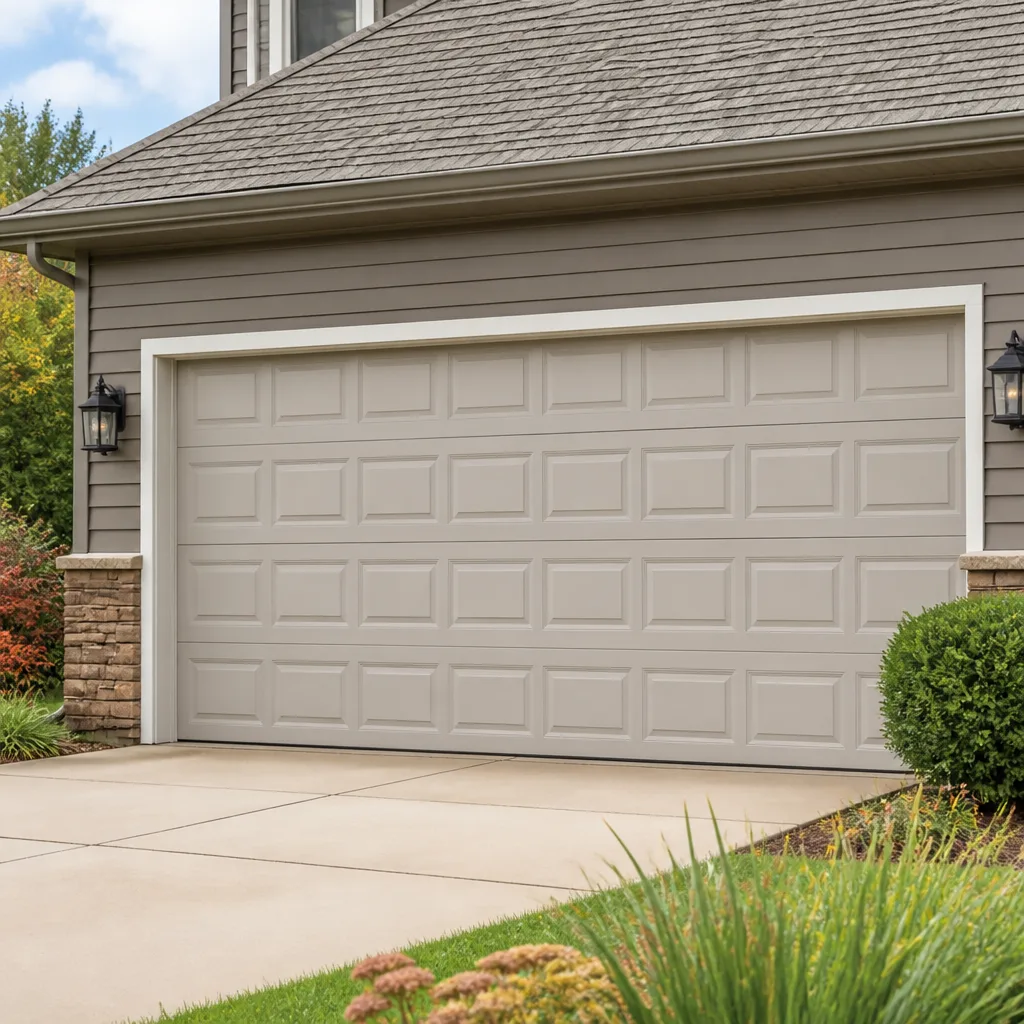 Raised-panel steel
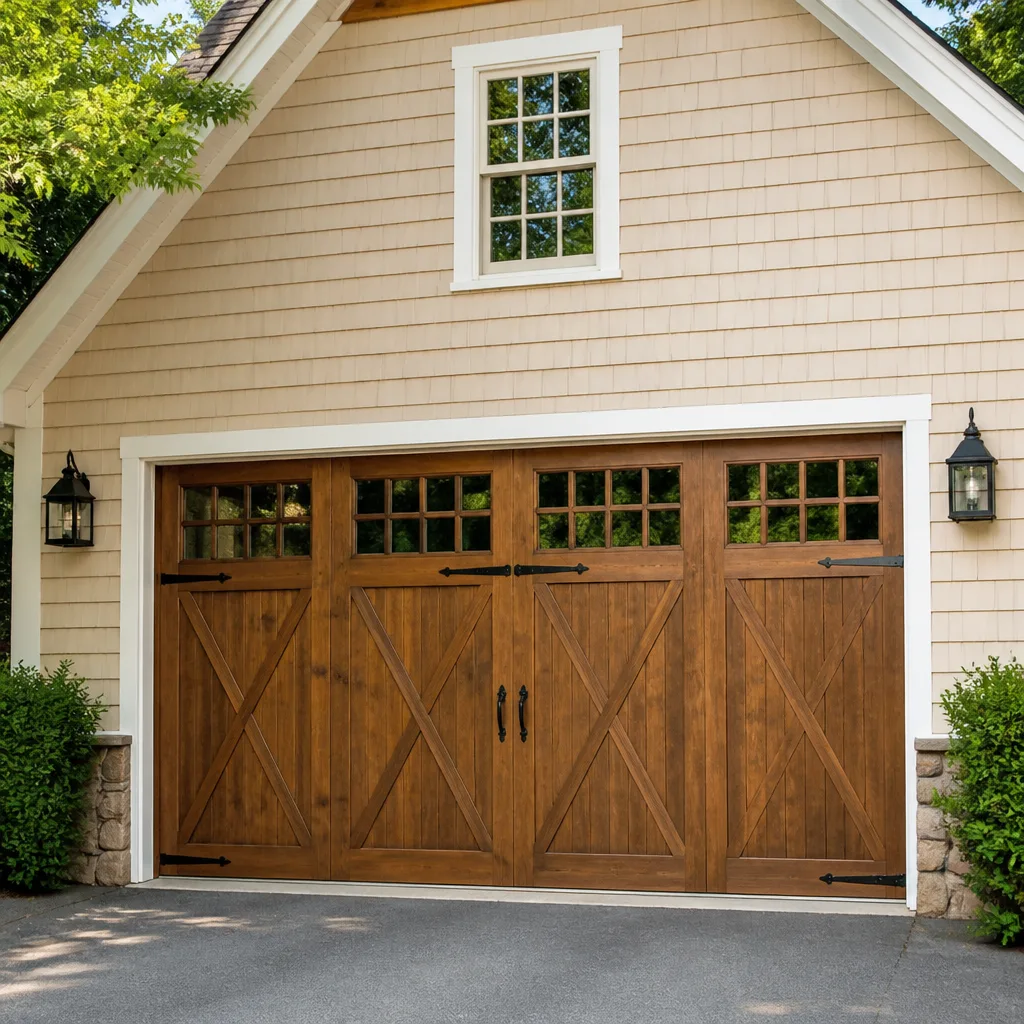 Carriage house
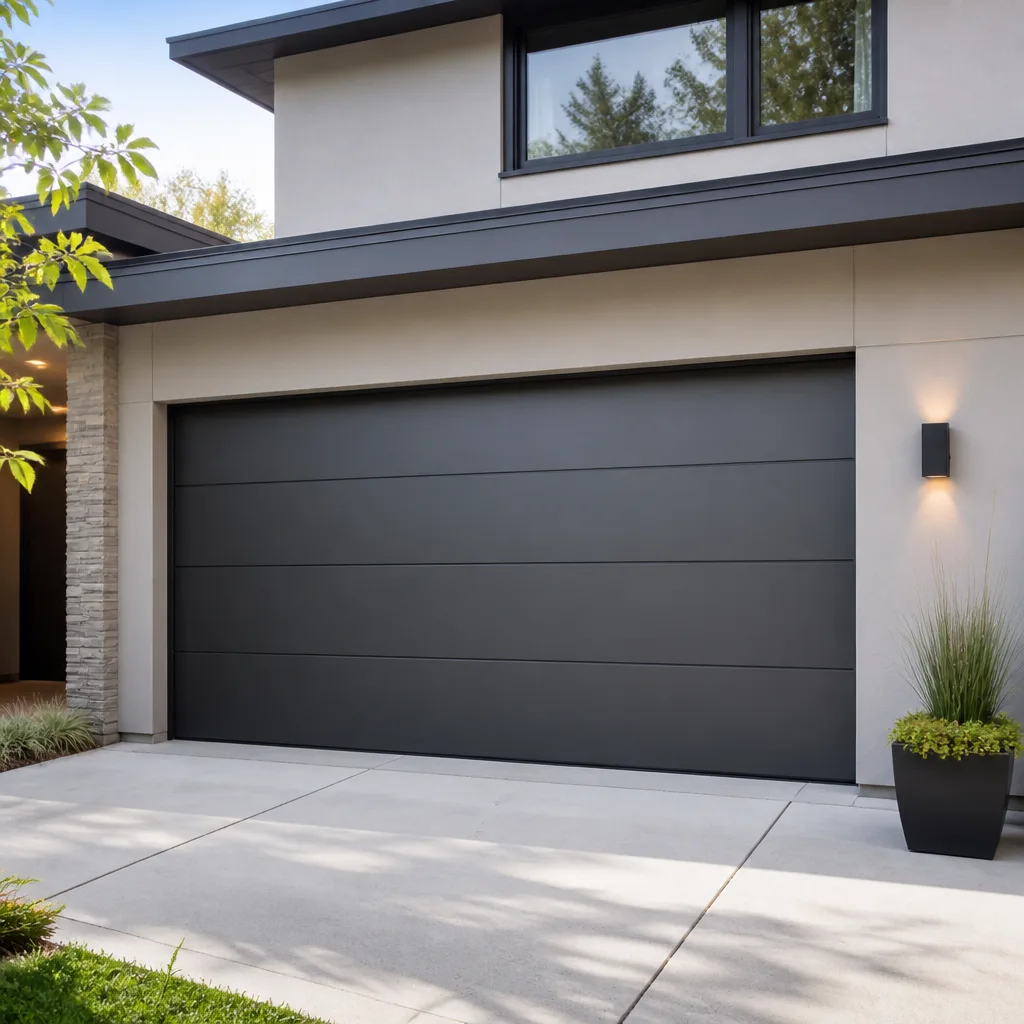 Modern flush
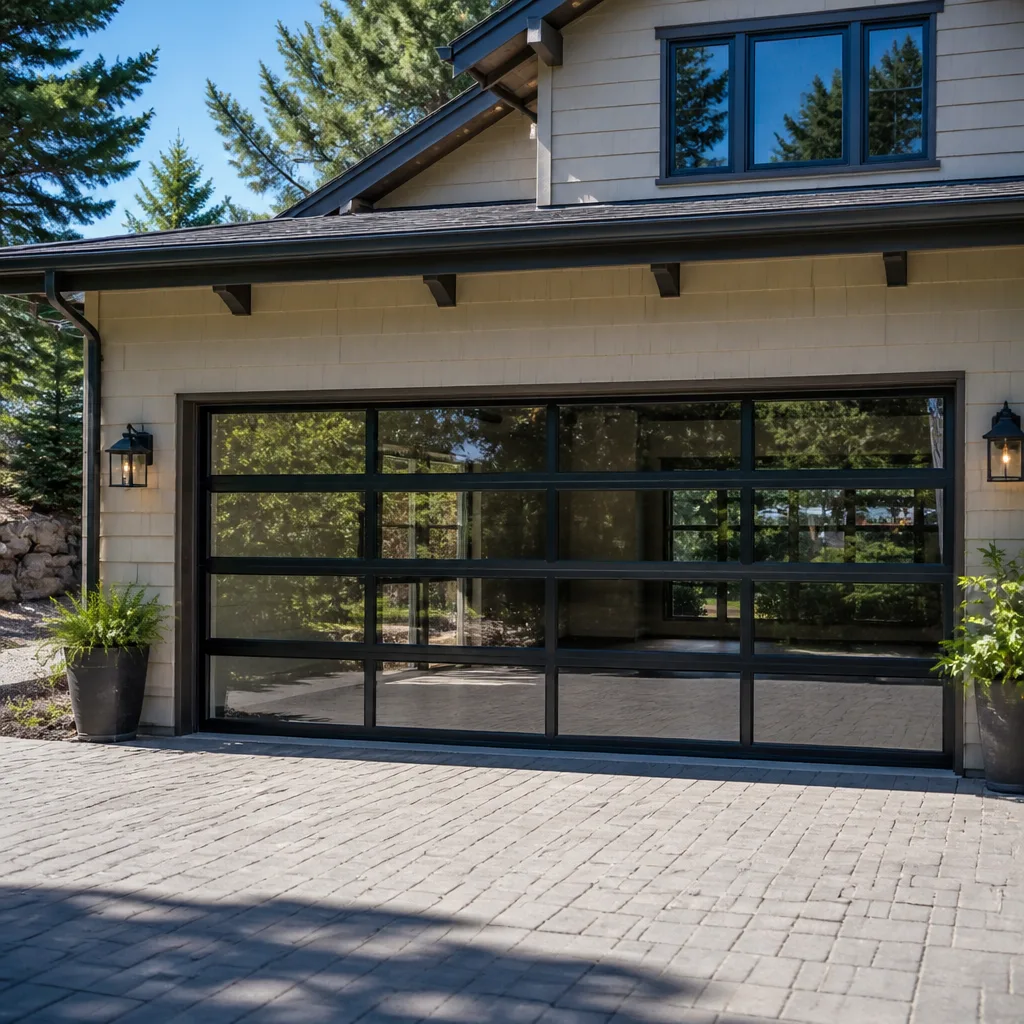 Full-view glass
 LiftMaster openers
 Chamberlain openers
Full 25-point door and opener safety check with every visit - springs, cables, rollers, tracks, and your LiftMaster or Chamberlain opener included
You get a price before we start. It does not change when the pro arrives.
Get your free estimateGarage Door Permits, Codes & Inspections in Providence, RI: What You Need to Know
Most people assume a garage door swap is a simple product replacement with no paperwork attached. That assumption is where trouble starts. A new door changes the opening, the anchoring, the spring load and, on an attached garage, the fire separation between the house and the space where cars park. Those are the parts a building inspector cares about, and they are the parts that get skipped when a job runs without a permit. In this guide we walk through when Providence actually requires a permit, how to check what was filed on your own home, what an inspector looks at, and how unpermitted work can follow you into an insurance claim or a closing. If you would rather have a straight answer on your own door, the garage door repair team can look at it and tell you what applies.
Quick Answer
In Providence and across Rhode Island, a full garage door replacement or any structural change to the opening usually requires a building permit, while routine repairs, spring changes and opener-only swaps generally do not. The line isn’t set by the door’s price or how big the job feels. It’s set by whether you’re altering the structure, the fire separation or the load path of the opening. When in doubt, the Providence Department of Inspection and Standards is the office that decides, and a quick call settles it before anyone orders a door.
Styles & brands we work with
- Raised-panel steel
- Carriage house
- Modern flush
- Full-view glass
- LiftMaster openers
- Chamberlain openers
Table of Contents
- When Does Providence Require a Permit for Garage Door Work?
- How to Check If Your Garage Door Was Installed With a Permit
- Which Rhode Island Code Sections Apply to Garage Doors
- What an Inspector Actually Looks For
- Unpermitted Work and Your Homeowner’s Insurance
- How Permits Affect a Providence Home Sale
- Repair, Replace or Leave It Alone: A Practical Guide
- Common Mistakes to Avoid
When Does Providence Require a Permit for Garage Door Work?
The short version: a new door in an existing opening is usually permit-free, but anything that touches the structure of the opening or the wall around it usually isn’t. Rhode Island follows the state building code, and the city enforces it through the Providence Department of Inspection and Standards. That department, not your installer’s opinion, is the authority on whether your particular job needs a permit.
Here’s how the work generally breaks down by category. This is the practical split we’ve settled into after years of pulling doors out of Providence openings and putting new ones in:
- Routine repairs (no permit in most cases): A broken spring, worn rollers, a bent track section, cables, hinges, weather seal on the bottom of the door. These restore the door to how it already is. No structural change.
- Opener-only swaps (no permit in most cases): Replacing a LiftMaster, Chamberlain or Genie unit with a new one, mounting brackets staying in the same place. The door and opening are untouched.
- Full door replacement (permit usually required): Pulling one door and installing another. The size is the same but the door is a new product, the anchoring and spring balance get reworked, and the inspector wants to see the finished installation.
- Structural changes (permit definitely required): Widening an opening, raising the header, converting a garage, removing or altering a load-bearing member, changing fire separation. These can need engineering and always need permits.
- Fire-rated separation on an attached garage: Any change to the door’s fire rating, the wall between house and garage, or the self-closing hardware on a door that opens into the living space is treated as a life-safety item.
The category that trips up most people is the full replacement. It feels like swapping a product, so it seems like it shouldn’t need paperwork. In our experience, a same-size replacement in a compliant opening often gets reviewed under a lesser scope, but the safest call is to ask the city before the door is ordered. The answer costs nothing and a re-inspection after the fact costs real time.
How to Check If Your Garage Door Was Installed With a Permit
Providence publishes building and inspection records online, and you can search them by address. If you’re buying, selling, or just want to know what was filed on your own house, this is a short list of steps that saves a longer conversation later.
- Find the property record. Use the city’s online property and building records system and search by your street address. Records are listed by parcel, so confirm the owner name and lot match.
- Look at the permit history. Scroll through issued, expired and closed permits. A door replacement usually shows up as a building permit with a description close to “garage door replacement” or “alteration.”
- Read the inspection log, not just the permit. A permit that was opened and never inspected or closed is a red flag. What matters is whether the final inspection was signed off.
- Match the dates. A door installed before the permit was opened is a problem, because the work had to be done before the inspector could have seen it.
- Request the file if anything looks off. The Providence inspection office can pull the paper file and tell you whether the record is incomplete or was never filed at all.
- Write down what you found. If you’re selling, keep a copy. If you’re buying, this is exactly the kind of thing to raise during the inspection period.
If the records window shows nothing for your garage, that doesn’t automatically mean the work was unpermitted. Small jobs don’t generate records, and some repairs were done in a compliant way by a previous owner without filing. But if the door looks new and the record is blank, ask the seller or your realtor to explain it before closing. A blank record with a newer-looking door is the pattern worth chasing.
We hear from Providence homeowners who inherited an unpermitted door from a previous owner and only noticed when they went to refinance. The good news is that unpermitted work can usually be resolved by having a licensed professional evaluate the installation and then pulling a permit and inspection to legalize it. It is rarely as bad as people fear, but it does take time. Call (877) 792-6062 and we’ll walk through what you’re looking at.
Which Rhode Island Code Sections Apply to Garage Doors
Rhode Island’s residential building code is what local inspectors enforce, and it speaks to garage doors in a few specific places. You don’t need to read the whole book. Focus on the sections that touch the parts of a garage door the code actually cares about.
The areas of the code that most often apply to garage door work:
- Fire separation between garage and residence. On an attached garage, the walls and ceiling between the garage and living space need a fire rating, and the door from the garage into the house needs to resist fire and close on its own. If the garage door is part of the rated assembly, its rating and hardware are within scope.
- Header and structural framing. The opening is framed with a header sized for the span. If the span gets bigger or the header changes, the code requires design and inspection. This is usually the part a permit is really asking about.
- Means of egress. A garage that has become a living space or is part of the pathway out of a home has different requirements than a parking bay. Converting a garage to a bedroom or living area is where code and permit conversations really take off.
- Door performance. The door itself has to close, open, and stay where it’s put, and the hardware has to be installed per the manufacturer’s listed requirements. The listed install instructions are part of what an inspector checks against.
- Automatic closing hardware. Openers on a door that opens into a living space typically need a functioning close mechanism, and the reversal safety features on the door have to work. This is inspected under the opener’s listing and the local code.
Nothing in the state code stops a homeowner from doing cosmetic work on their own property. But the moment the work crosses into structural, fire-rated or conversion territory, the code becomes relevant and a permit and inspection follow it. The Providence inspection office is the office that will interpret any ambiguity, and the smart move is to have that conversation early. If you want our read on a specific opening, our garage door repair team will tell you what a compliant installation should look like for your house before you commit to anything.
What an Inspector Actually Looks For
An inspection is not a pass-fail judgment on whether the door is pretty. It’s a check on the parts of the installation that protect you: the structure, the fire separation, and the safety of the operating door and opener. Knowing what’s being looked at helps you make sure the work is done right the first time.
These are the things an inspector typically reviews on a garage door installation:
- Header and framing. Confirm the opening is framed the way the permit drawings say, that the header is sized for the span, and that no load-bearing member was cut or altered without approval.
- Anchoring. The track and hardware are attached to solid framing with appropriate fasteners, not to siding or drywall alone. A garage door under load puts meaningful force on its anchors.
- Headroom, backroom and side room. The installed door fits the available space per the manufacturer’s requirements. If a door needs more headroom than the garage has, the opener and door will strain and the installation isn’t correct.
- Spring balance and cables. The door lifts and lowers with the mechanism it was designed for, sits level, and doesn’t drift. Springs are high-tension assemblies and are inspected for correct installation, never adjusted by an untrained person.
- Fire-rated components on attached garages. The house-to-garage door closes on its own, holds its rating, and the separation between garage and living space is intact.
- Opener safety features. The auto-reverse works when the door meets an obstruction, the safety sensors respond, and the force adjusts correctly. This is checked on the installed door, not on the box.
- Weather seal and finish. The door seals at the bottom and sides so wind-driven rain doesn’t get behind it and so the opening stays weather-tight.
- Final paperwork. The permit card gets signed off and the record is closed. If it isn’t, the record on the house stays open.
What the inspector does not do is decide whether you picked the right color or the right door for your house. What matters is that the work behind the visible door is correct. If you’re going to be present for the inspection, ask them a few questions about the fire separation and the opener. Those conversations are useful, and they don’t cost you anything.
If you’d like to see what a compliant install looks like before you spend anything, our garage door installation team will walk you through the parts of your opening the code cares about. Our technicians have up to 10 years of experience with these inspections across Providence, and pulling a permit with an experienced installer on the job is much simpler than taking one on yourself.
Unpermitted Work and Your Homeowner’s Insurance
Unpermitted work doesn’t always surface immediately. It surfaces when a claim is filed and the insurer’s adjuster starts asking what was done to the property and under what scope. A garage door is property, and if the installation caused or contributed to the loss, the absence of a permit can complicate how the claim resolves.
Here’s the honest version of how this plays out in practice:
- Damage from a failure. If a door drops, a spring breaks and hits something, or an opener fails in a way that damages the door or vehicle, the adjuster is going to look at the installation. A permit and final inspection are the clearest record that the work met code.
- A fire at the garage-residence boundary. This is the one to take seriously. Fire separation on an attached garage exists to give you time to get out and to keep fire from moving into the house. Unpermitted work that compromised the separation is exactly the kind of thing an insurer wants to understand.
- Water intrusion claims. A door installed without proper weather seal or flashing can let water into the structure behind the opening. If a water claim gets denied or reduced because the install wasn’t to code, the cost lands on the homeowner.
- Policy condition of maintaining the property. Most homeowner policies condition coverage on maintaining the property in good repair and in compliance with code. Unpermitted work isn’t a guaranteed denial, but it hands the insurer a question to ask.
The fix is not complicated. If you’ve inherited an unpermitted door, a licensed professional can evaluate the install, and in most cases the work can be brought into compliance by pulling a permit and inspection to legalize what’s there. Our team can work with your insurer and your realtor to document what’s on the house. Call (877) 792-6062 and we’ll explain the process without overselling you on work you don’t need.
How Permits Affect a Providence Home Sale
In a Providence transaction, an open or missing permit on a garage door usually comes up during the buyer’s inspection period. Realtors in Elmhurst, Mount Pleasant, Hope and the East Side see this often enough that it’s a known item to check. The buyer’s inspector is going to look at the garage, notice a newer-looking door, and ask what was filed.
What generally happens next:
- Buyer’s inspector flags it. The inspection report notes a new or newer door with no visible permit record. That goes into the buyer’s request for repairs or a credit.
- Seller digs through records. The seller checks city records, calls their installer, or asks their realtor. If there’s no record, the seller is now negotiating from a weaker position.
- Buyer asks for a permit and inspection to be pulled before closing. This is the usual resolution. It costs money and takes time, and it either happens before closing or gets negotiated into the deal.
- Closing gets pushed or the price gets adjusted. Either way, the missing permit has a cost. It’s not the full price of the door, but it’s rarely zero.
The cleanest way to avoid this is to pull the permit when the door is installed. The permit is a small line item next to the cost of a door and it makes the next sale of the house much simpler. Buyers’ agents in Providence have gotten more careful about this, and the momentum is toward asking for records every time. It’s worth getting ahead of.
If you’re selling in the next year and aren’t sure about your garage door records, get in touch. We can check the installation, tell you whether it looks compliant, and if needed, coordinate with an installer to bring it up to code. Call (877) 792-6062 for a free estimate on anything you need evaluated.
Repair, Replace or Leave It Alone: A Practical Guide
A lot of Providence homeowners ask whether they should fix a failing door or replace it. That decision drives everything downstream: permit or no permit, inspection or no inspection, a small invoice or a much larger one. Here’s how we think about it, with an eye on the permit picture.
The rough split we use:
- Repair, no permit: One part failed (spring, opener, roller, track section, cable). The door and opening are otherwise sound. Fix the part, skip the permit, get on with your day. This is most of the repair work we do in Providence.
- Replace, permit likely: The door is at the end of its life, the panels are damaged beyond patching, or the owner wants a different style or insulation. The door and the anchoring come out and a new door goes in. Pull the permit.
- Structural or conversion, permit required: The opening changes size or position, the garage becomes living space, or the fire separation is altered. Get an engineer and the city involved before you touch a hammer.
- Opener-only, usually no permit: A new LiftMaster, Chamberlain or Craftsman unit in the same mounting location, door and opening untouched. Change the unit, keep the record clean.
The question that catches people is whether a full replacement always triggers a permit. In our experience, the city is reasonable, and a same-size replacement in a compliant existing opening is often reviewed under a lesser scope than a structural change. But “often” is not “always,” and the wrong assumption on a $4,000 door replacement is expensive. Call the Providence inspection office, or call us and we’ll tell you what the job looks like on the ground. The garage door opener repair side of our business covers the no-permit side, and for anything bigger we’ll tell you whether a permit is worth pursuing before you commit.
One more thing worth knowing. Replacement cost in the Providence market runs roughly $1,200 to $3,800 for a standard single door installed, depending on material and insulation, with insulated double doors and premium materials going higher. A permit and inspection are a small fraction of that. If you’re already budgeting for a new door, put the permit in the budget instead of discovering it later. Every quote we give includes that conversation, and the written estimate sets the final price before any work starts.
Common Mistakes to Avoid
- Assuming a full replacement never needs a permit because “it’s the same size.” Size isn’t the whole test. A new door replaces the anchoring, the spring balance and, on an attached garage, the fire-rated assembly. Total up the parts of the door that are new, not just the width. If it’s more than the cosmetic layer, ask the city.
- Checking the permit was pulled but not that it was inspected. A permit that was opened and never inspected or closed is worse than no permit, because it tells the next buyer exactly what happened. The final inspection is the record that counts.
- Letting a general handyman handle an attached-garage door without confirming insurance and licensing. The door itself isn’t the risk; the header, fire separation and spring tension are. When the work touches those, use a licensed professional and get their insurance and license in writing.
- Skipping the fire-rated garage-to-house door when replacing a garage door. This is the door between your garage and your living space, and it has to close on its own and hold its rating. If it’s been propped open or removed, restoring it is part of a compliant job.
- Letting an unpermitted door sit until you sell. The permit cost and the inspection don’t get cheaper with time, and a missing permit at closing can cost you more in negotiation than the permit would have. Get ahead of it.
- Assuming a blank city record means the work was unpermitted. Some small jobs were done in a compliant way that didn’t file. If you’re unsure, ask a professional to look at the installation before you assume the worst.
- Mounting a new opener in a location that affects the spring balance. A new LiftMaster or Genie unit in the wrong mounting position changes how the door is balanced, which shortens spring life and can fail an inspection. Match the opener to the door’s listing.
See the difference
 Before
 After
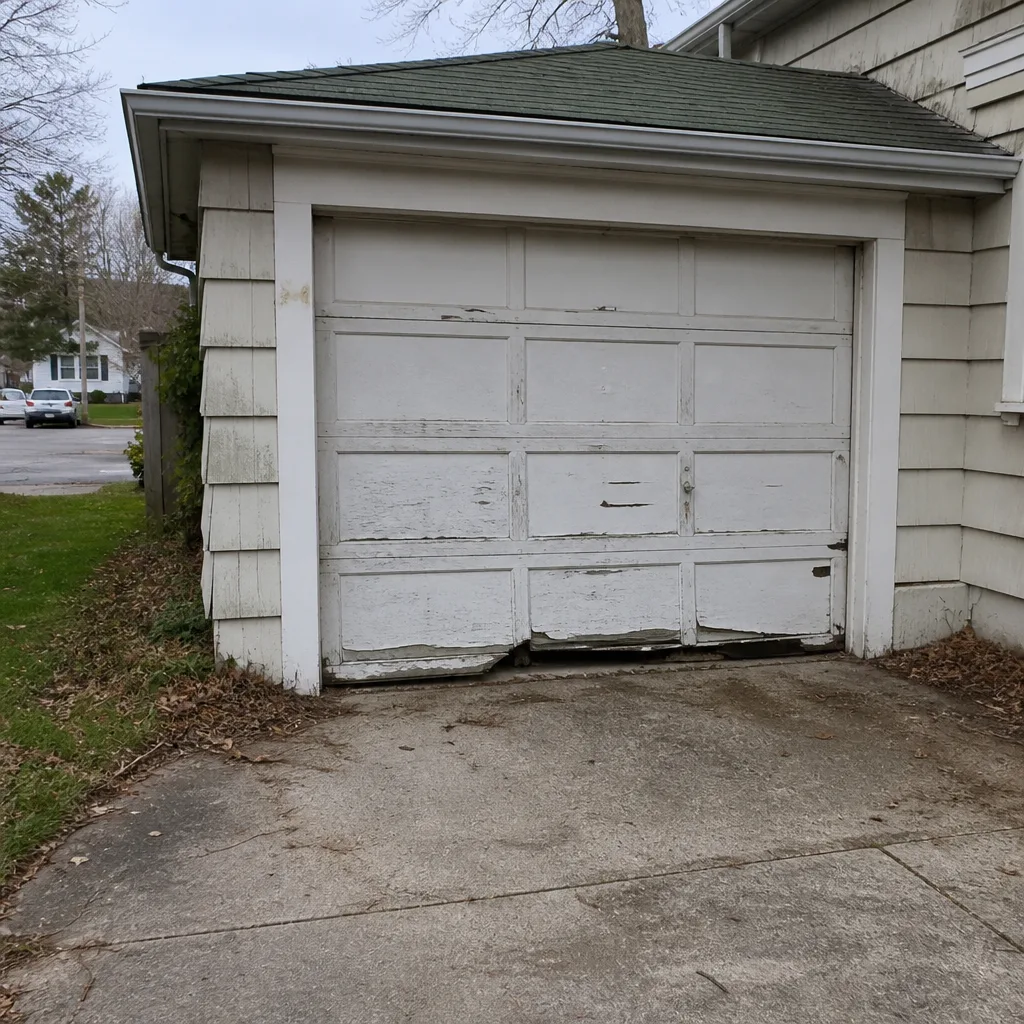 Before
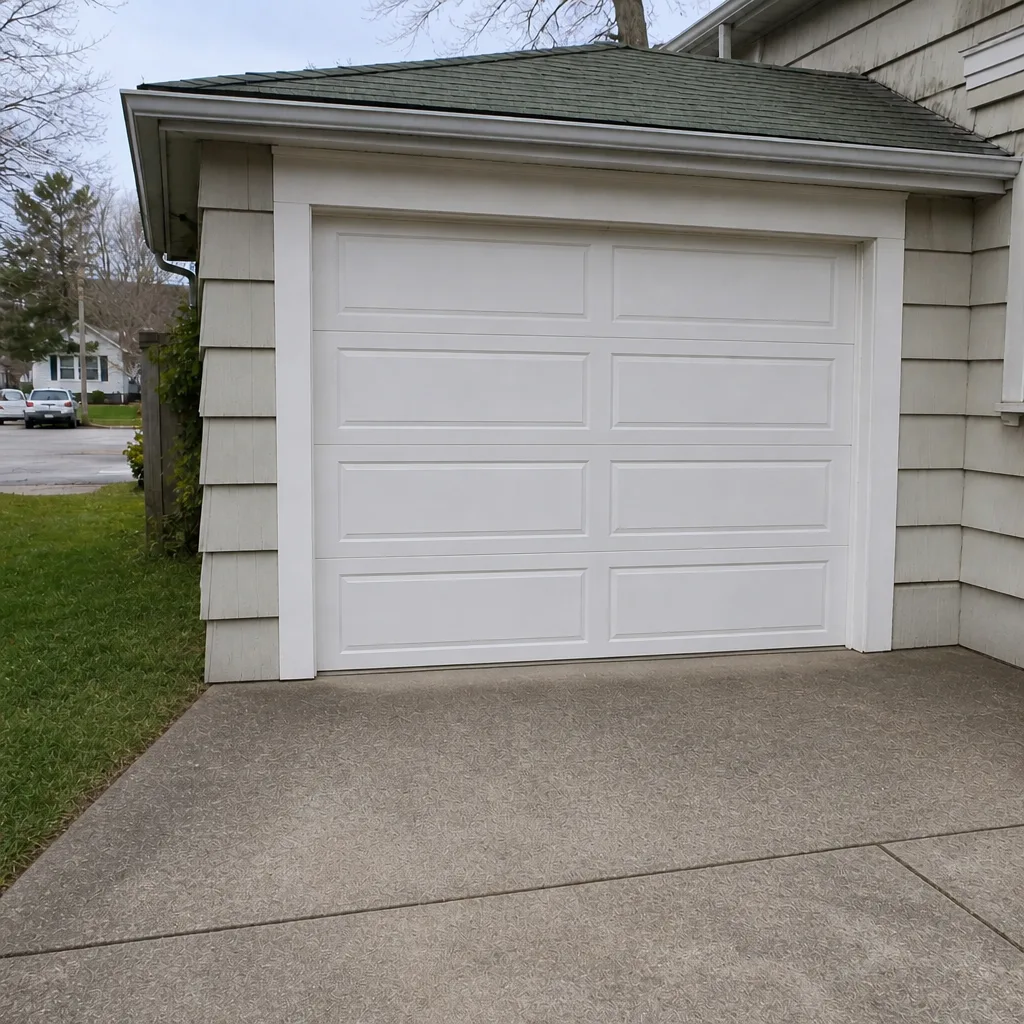 After
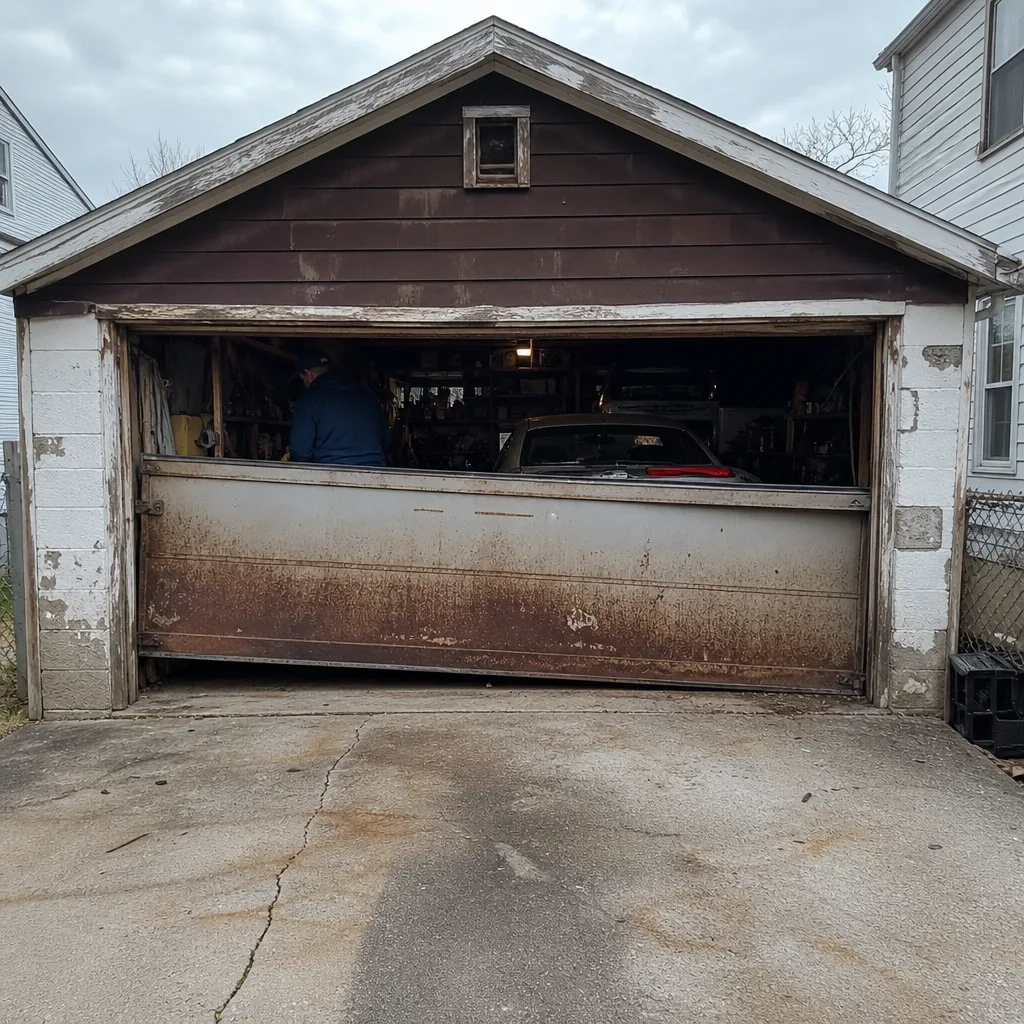 Before
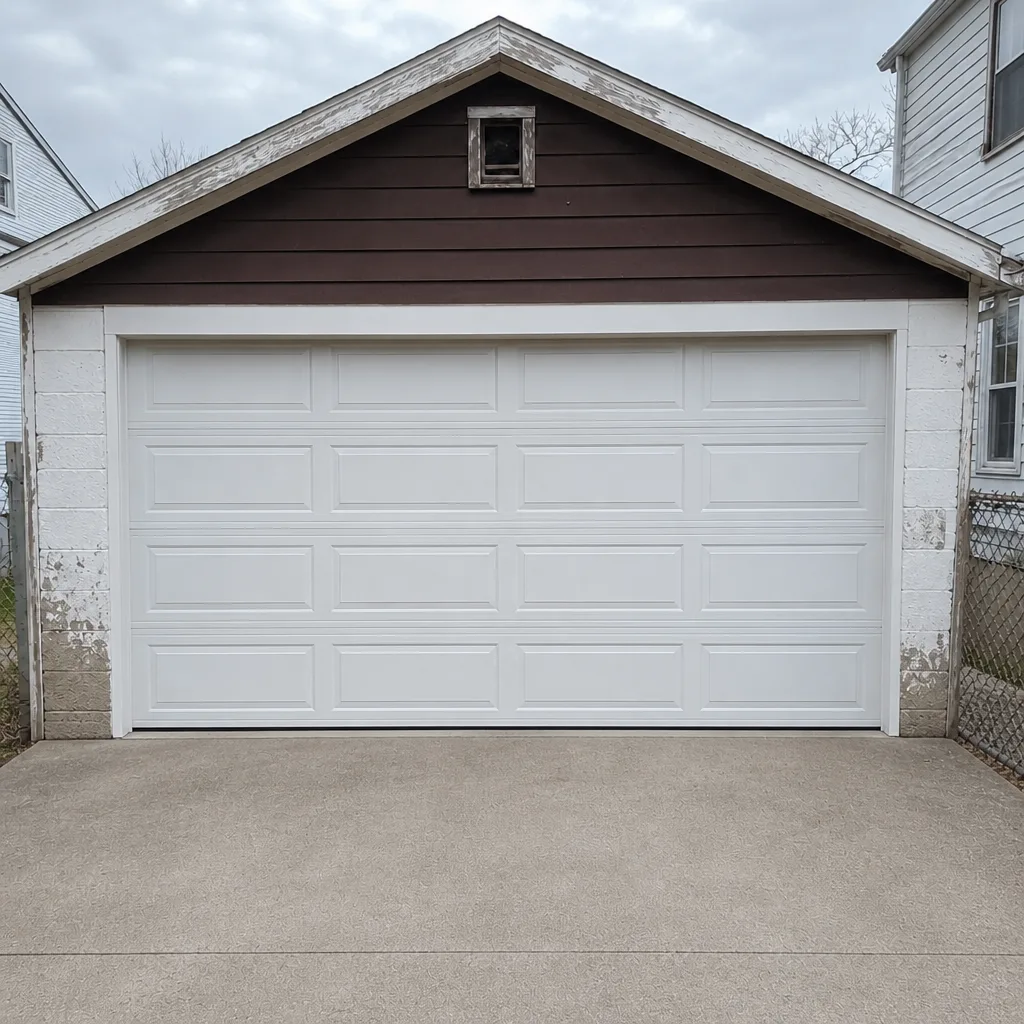 After
When to Call a Professional
Most garage door repairs are not a DIY project, and a few are genuinely dangerous. Springs and cables are under high tension and can cause serious injury if handled by an untrained person. Anything involving the structural frame, the fire separation between the garage and the house, or the electrical work for an opener belongs with a licensed professional. On top of that, an inspection is only useful if the underlying work is done right, and that is not something a homeowner should try to figure out from a video.
Call us when the door started behaving differently, when you’re buying or selling a Providence home and the door records are unclear, when you’re planning a replacement and want to know whether a permit applies, or when a previous owner’s work is on the property and you want a straight answer on whether it’s compliant. Garage Door Repair Providence Pros offers free estimates in Providence, and we work on the major brands you already own, including LiftMaster, Wayne Dalton and Raynor. Call (877) 792-6062 for a free estimate.
Frequently Asked Questions
Usually yes for a full door replacement, and always for structural or fire-rated changes. Routine repairs, spring replacement and opener-only swaps generally do not require a permit. The cleanest answer comes from the Providence Department of Inspection and Standards, who can tell you based on your specific opening. Call (877) 792-6062 for an exact quote on the work, and we’ll tell you whether a permit belongs on the job – estimates are free.
Permit fees in Providence are set by the city and are typically a modest fraction of the total installation cost. They are not itemized here because the fee depends on the scope of the work and the value the city assigns to it. The best way to get an exact number is to call the Providence inspection office. For a written estimate on the door itself, call (877) 792-6062 – estimates are free.
You can list and sell, but the missing permit will likely surface during the buyer’s inspection period and become a negotiating item. Most buyers will ask for a permit and inspection to be pulled before closing, or for a credit. It’s cleaner to legalize the door before you list. Call (877) 792-6062 and we’ll walk you through what a compliant installation should look like.
Usually not. An opener-only swap in the same mounting location, with the door and opening untouched, is typically treated as equipment replacement rather than construction. If the opener change involves moving the mounting, changing the spring balance, or working on the fire-rated door between the garage and the house, ask the Providence inspection office before proceeding. Call (877) 792-6062 for a free estimate on the opener work.
An inspection checks the framing and header, the anchoring to solid structure, headroom and clearances, spring balance and cable condition, the fire-rated separation on an attached garage, the opener’s safety reversal features, and the weather seal. It does not change the color or style of your door. It confirms the installation is safe and code-compliant. Call (877) 792-6062 for a free estimate if you want your door looked at.
It can complicate a claim. If a garage door installation without a permit contributes to a loss, the insurer’s adjuster will ask how the work was done and under what record. A permit and final inspection are the clearest evidence the work met code. If you’ve inherited an unpermitted door, the usual fix is to have a licensed professional evaluate the install and pull a permit and inspection to legalize it. Call (877) 792-6062 for a free estimate on the evaluation.
No. A spring repair restores the door to how it already is and does not change the structure of the opening, so a permit is not required for a standard spring replacement. Springs are dangerous under tension, though, and should only be handled by a trained technician. Call (877) 792-6062 for a free estimate on spring repair – estimates are free.
Timelines vary with the city’s workload and the scope of the job, and they cannot be stated precisely here. A permit for a standard door replacement is usually resolved faster than a structural change that needs plan review. The best way to know your timeline is to call the Providence inspection office before you order the door. Call (877) 792-6062 for a free estimate on the work itself.
The Bottom Line
A garage door permit isn’t a piece of bureaucracy to be routed around. It’s the record that proves the work was done right, and it protects you at the two moments that matter: an insurance claim and a home sale. Repair and opener-only work generally skip the permit; full replacements and structural changes generally don’t. A blank record doesn’t mean the door was done wrong, and a filed permit doesn’t always mean it was inspected. What matters is that the record is closed and the installation is safe. If you want a straight read on your own Providence garage door, we’re happy to take a look. Call (877) 792-6062 for a free estimate.
Written by the team at Garage Door Repair Providence Pros.