Last updated November 23, 2026
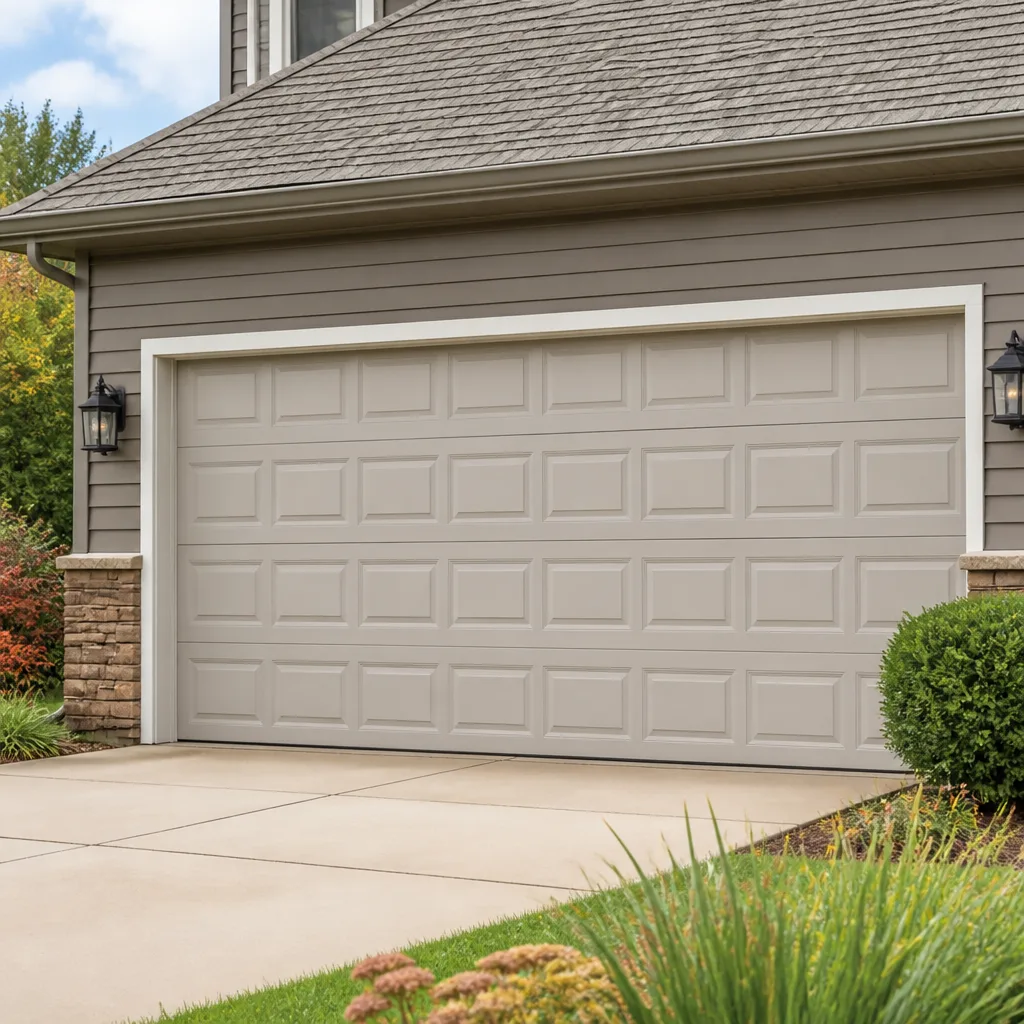 Raised-panel steel
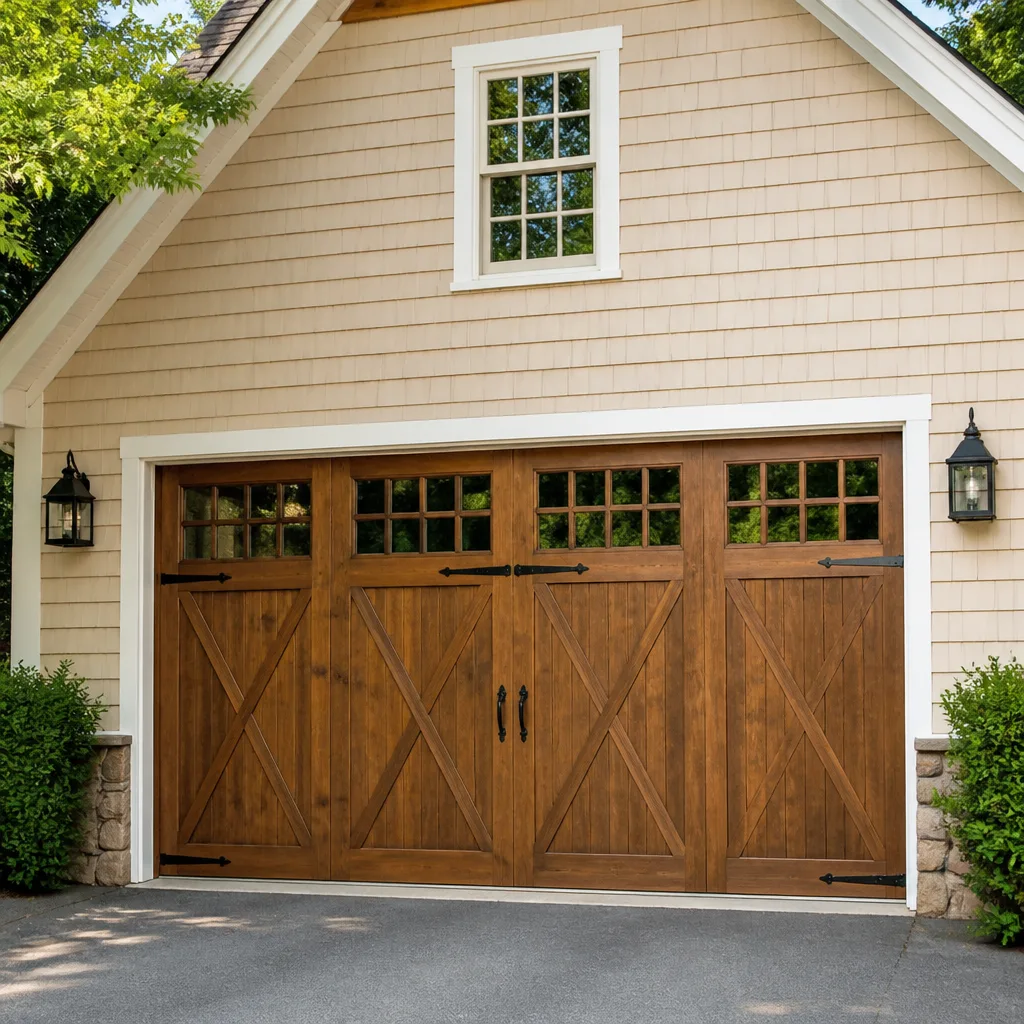 Carriage house
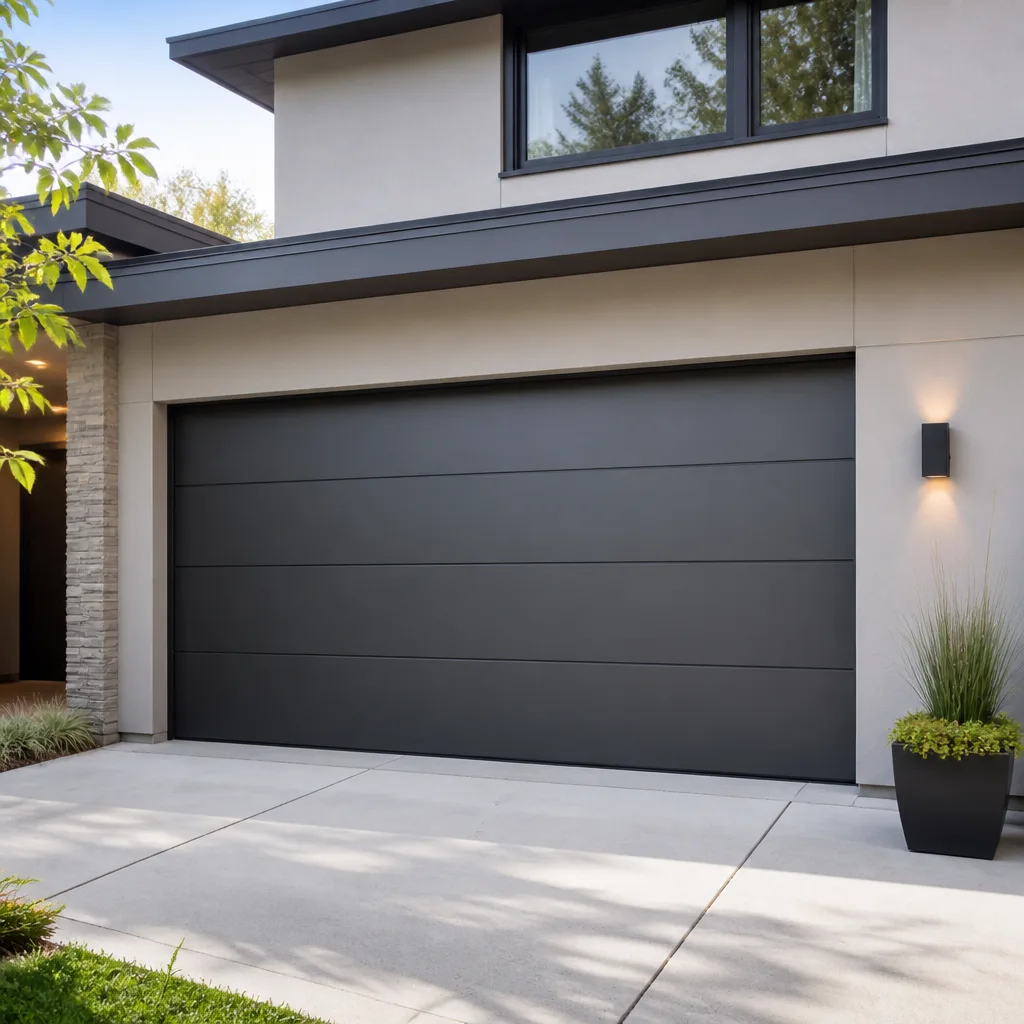 Modern flush
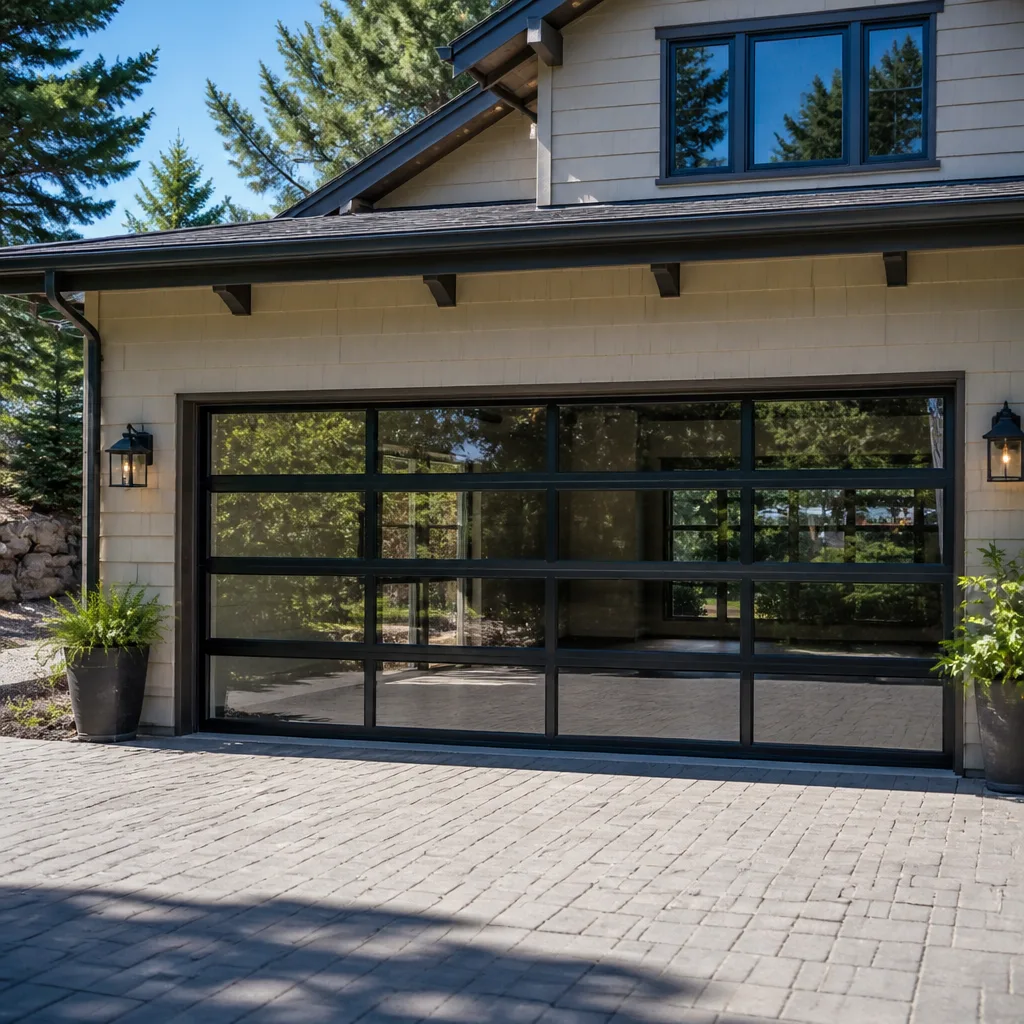 Full-view glass
 LiftMaster openers
 Chamberlain openers
Full 25-point door and opener safety check with every visit - springs, cables, rollers, tracks, and your LiftMaster or Chamberlain opener included
You get a price before we start. It does not change when the pro arrives.
Get your free estimateGarage Door Repair Maintenance Schedule: What to Do and When
Most garage door advice sounds the same: lubricate it once a year and you’re fine. That’s not a schedule, it’s a shrug. The parts on your door don’t all age at the same rate, and they don’t fail politely in order. Springs, cables, rollers, hinges, and the weather seal each wear on their own clock, and the one that gives out first usually takes the others with it. A torsion spring, for example, is rated for roughly 10,000 cycles, which at two open-and-close cycles a day works out to about 14 years on paper. Most fail sooner, between years seven and ten, because cold-weather stress cycling in a Providence winter works against that rating. This guide gives you a calendar tied to real part lifespans, not a generic checklist, so you can catch the weak link before your door comes down.
Quick Answer
A garage door maintenance schedule should be built around part lifespans, not calendar seasons alone. Check the balance and listen to the door monthly, lubricate the moving parts every six months, inspect cables and springs at the first frost and again at thaw, and budget for spring replacement around the seven-to-ten-year mark in a climate like Providence’s. Most of the schedule you can do yourself; springs, cables, and opener electrical work belong to a trained technician.
Styles & brands we work with
- Raised-panel steel
- Carriage house
- Modern flush
- Full-view glass
- LiftMaster openers
- Chamberlain openers
Table of Contents
- How Long Does Each Garage Door Part Actually Last?
- The 60-Second Monthly Balance Test
- What to Lubricate, What to Leave Alone, and Why WD-40 on Rollers Is a Mistake
- The Fall Checklist: What to Do Before the First Frost in Providence
- The Spring Checklist: What to Check After the Thaw
- Opener Maintenance: What You Can Check and What You Shouldn’t Touch
- How to Document Maintenance for a Providence Home Sale
- Common Mistakes to Avoid
How Long Does Each Garage Door Part Actually Last?
Every part on your door has a predictable lifespan, and knowing those numbers is what turns a vague chore list into a real schedule. The table below reflects what we see on doors across Providence, factoring in the freeze-thaw cycle that stresses metal and the humidity that softens wood and rubber. Treat these as typical ranges, not guarantees – how often you open the door and whether you keep it lubricated shifts the numbers.
- Torsion springs: About 10,000 cycles. Two cycles a day puts the ceiling near 14 years, but seven to ten years is where most fail in a cold-winter climate. Extension springs run shorter.
- Cables: Five to ten years. They’re usually replaced with the springs, since a snapped spring puts sudden load on the cables.
- Rollers: Steel rollers last around ten years; nylon rollers often go five to seven before they flatten or seize.
- Hinges: Ten to fifteen years on a well-lubricated door. The bottom hinge wears fastest because it carries the most load.
- Weather seal and bottom rubber: Three to five years. New England sun and freeze-thaw brittle it faster than most homeowners expect.
- Opener drive (belt, chain, or screw): Eight to twelve years for the drive system; the opener unit itself often needs replacing around the same window.
- Panels and tracks: Fifteen years or more if the door is balanced and dent-free, less if it’s been hit or runs out of alignment.
Here’s what that means in practice. If your door was installed a decade ago and has never had the springs replaced, you’re living on borrowed cycles. That’s not a scare tactic, it’s just the math. When a spring goes, it usually goes without warning, and the door becomes too heavy to lift by hand. The best time to plan for spring replacement is before it happens. The same logic applies to rollers and hinges: they’re cheap to replace on a schedule and expensive to ignore once a door starts to bind.
If you’re not sure how old the parts are, a technician can read the wear. We work on equipment from Chamberlain, Clopay, Amarr, and five other major brands, so whatever you have in your garage, the diagnosis is the same. If you’d rather have the door looked over before something fails, our garage door repair team can walk the door with you and tell you what’s actually due.
The 60-Second Monthly Balance Test
The single most useful thing you can do for your door takes a minute and requires no tools. It tells you whether your springs are still doing their job, and it’s the closest thing to an early-warning system you’ll get before a spring snaps. Do it on a day when you’re already walking past the garage, every month or so.
- Close the door fully. Make sure no one is in the path of the door.
- Disconnect the opener. Pull the manual release cord so the door is on the springs alone. The door should move by hand.
- Lift the door to about waist height. Use one hand, gently, with steady pressure.
- Let go. A healthy, balanced door stays wherever you leave it, right around the midpoint.
- Watch what it does. If it drops on its own, the springs have lost tension. If it rises on its own, they’re overtensioned.
- Reconnect the opener and test the door’s normal operation once.
A door that won’t hold position is telling you the springs are on their way out. It’s not an emergency yet, but it’s a plan-a-repair signal, not a wait-and-see. A door that jumps up or falls hard needs a technician, because correcting tension on a torsion spring is genuinely dangerous work. Don’t try to adjust it yourself.
While you have the door on manual, listen for grinding, squeaking, or a rattle that wasn’t there last month. Rollers and hinges give you weeks of noise before they fail, if you’re paying attention. That noise is the door asking for maintenance, and a quick listen once a month is the cheapest diagnostic you’ll ever run. If the noise comes from the opener rather than the door itself, that’s a separate problem – our garage door opener repair page covers what those sounds mean.
What to Lubricate, What to Leave Alone, and Why WD-40 on Rollers Is a Mistake
Lubrication matters, but the wrong product does more harm than good. The rule of thumb: use a purpose-made garage door lubricant, not a general-purpose spray. WD-40’s standard formula is a solvent and water displacer, not a long-term lubricant. Sprayed on rollers and hinges, it strips existing grease, attracts dust that turns into grit, and evaporates faster than it protects. It feels smooth for a week and then the part wears faster than it would have untreated.
What to Lubricate and How Often
- Hinges: Every six months. A couple of drops of garage door lubricant at each pivot point. Don’t overdo it; a dry hinge is better than a dust magnet.
- Rollers: Every six months, on the bearing, not the wheel face. A few drops on the stem, then roll the door up and down a couple of times to spread it.
- Springs: Every six months, a light coat on the coil, never on the cable itself. A dry coil is acceptable, but a light film quiets squeak and slows surface rust. This part should still be inspected by a technician, not serviced by hand.
- Tracks: Never. Tracks should stay clean and dry. Grease on the track collects grit and slows the rollers.
- Weather seal: A silicone spray on the rubber once a season keeps it from drying and cracking. Do not use petroleum-based products on rubber.
What Not to Lubricate
Leave the opener rail alone unless the manufacturer’s instructions say otherwise – some belt drive systems are built to run dry, and greasing them attracts dirt into the belt path. Skip the photo-eye lenses; they need a clean, dry wipe, not a lubricant film. And leave the springs’ mounting hardware alone. If you feel a spring needs adjustment, that’s a call-a-pro moment.
Timing for New England
Lubricate once in the early fall before the cold sets in, and once in the spring after the freeze-thaw season. Cold weather thickens grease, which means a door that ran quietly in September can start to groan in January if you only lubricated in the summer. In Providence, the interval between those two jobs falls around the time the leaves come down and again around the second or third week of thaw.
The Fall Checklist: What to Do Before the First Frost in Providence
Cold is hard on garage doors, and the first hard freeze is when neglected doors start to fail. The fall checklist is about preparing for the season when hardware contracts, grease thickens, and the seal has to keep cold air out of the house. Do this list once, before the ground freezes, and your door will get through the winter with fewer surprises.
- Test the safety reverse. Put a two-by-four flat under the door’s closing edge. The door should reverse on contact. If it doesn’t, stop and call a technician.
- Check the photoelectric safety eyes. Wipe the lenses clean, then have someone walk through the beam while the door closes. The door should reverse.
- Lubricate the hinges, rollers, and spring coil. Use garage door lubricant, not WD-40.
- Inspect the weather seal. Run your hand along the bottom seal and up the sides. Cracks, gaps, or a seal that’s gone stiff need replacing before the cold settles.
- Check the balance. Run the 60-second test above. If the door won’t hold, plan a spring inspection.
- Look for rust on springs and cables. Surface rust isn’t an emergency, but heavy pitting on a cable means replacement.
- Clear the tracks. Vacuum out grit and check for dents or bends. Don’t grease them.
- Check the door’s hardware. Tighten loose bolts on hinges and brackets. Don’t touch the torsion spring hardware.
Providence winters swing between freezing and thawing, and that cycle is what opens cracks in seals and forces moisture into joints. A door that seals in October will usually seal in January, but one that’s already leaking air will leak more once the cold gets serious. The fall checklist is the best shot you have at preventing that.
One more thing: the safety reverse test matters most this time of year, because a door that fails to reverse is a hazard on any day, and the cold makes a stiff seal or misaligned track more likely to trip the opener mid-cycle. If the door reverses randomly, or the opener lights flash and stop, don’t ignore it. A technician can isolate the cause quickly. That approach to diagnosis is what our Garage Door Repair Providence Pros team is built around, and it saves you from guessing.
The Spring Checklist: What to Check After the Thaw
The spring thaw does just as much damage as the freeze. Cycles of freezing and thawing move moisture into every crack and joint, and the door comes out of winter a little looser, a little more rusted, and often a little less balanced than it went in. The spring checklist is about catching what winter loosened.
- Re-run the balance test. The door should still hold its position at waist height.
- Listen for new noise. A groan or grinding after winter often means a roller or hinge has dried out or seized.
- Check the weather seal again. Freeze-thaw widens cracks. If the seal is split or hanging loose, it’s due.
- Look at the tracks. Ice and grit can bend a track. A door that drags at one point on the way up or down is the clue.
- Inspect cables for fraying. Look at the cable ends near the drum and the bottom bracket. Frayed strands mean replacement.
- Check panel alignment. Do the panels line up when the door is closed? A gap at one side means a hinge, roller, or track has shifted.
- Test the opener’s force and limit settings. The door should open and close smoothly without strain. If it stutters or reverses, call a technician.
- Re-lubricate. The fall lubricant has done its job; now is the time to apply fresh lubricant on hinges, rollers, and the spring coil.
If the door comes out of winter noticeably heavier or starts to drop when you let it go, that’s a spring problem and it needs a technician. Springs are dangerous. When one is under tension, a single wrong move can cause serious injury. That’s why our trained technicians handle spring work, and why we recommend you don’t. In our experience, spring repair is one of the most frequent calls we take in Providence as the thaw sets in, and it’s almost always a spring that was already past its rating the previous fall.
The spring checklist is also the right time to think about replacements you’ve been putting off. If the door is fifteen years old and the springs were never touched, installing new ones alongside new rollers and a fresh seal usually makes more sense than replacing them one at a time. If the whole door is on its last legs, our garage door installation page explains what the process involves.
Opener Maintenance: What You Can Check and What You Shouldn’t Touch
Your opener is an electrical appliance, so the safe maintenance is limited to what you can see and test without opening the housing. The good news is that covers most of what goes wrong. Here’s what you can safely do yourself:
- Test the safety reverse and photoelectric eyes every month. This is the most important check on any opener.
- Wipe the lenses on the safety eyes. A dusty lens is the most common cause of a door that won’t close.
- Listen for strain. A grinding or a stutter means the opener is working too hard. That usually points to a door problem, not an opener problem.
- Check the manual release. Pull it once a season. It should engage and disengage smoothly, and the door should move freely on the springs with the opener disconnected.
- Replace the remote battery once a year, and test every remote and keypad.
What you shouldn’t touch: the wiring inside the opener housing, the force and travel adjustment screws (these are set at installation and shouldn’t be changed unless the door or opener is replaced), or the safety sensors’ mounting brackets. Those are all jobs for a technician, because an opener that’s misadjusted can crush a pet or a child. That’s not an exaggeration – the safety reverse test exists for a reason.
Openers from Genie, Chamberlain, and other major brands generally give clear signals when something’s wrong: the opener flashes codes, or the door reverses without contact. Our technicians are equipped to read those codes on all the major brands, so if yours is doing something odd, the diagnosis is quick. Most opener problems turn out to be door problems – a heavy door or a bad roller makes a healthy opener look broken.
How to Document Maintenance for a Providence Home Sale
A maintenance log doesn’t just help you keep track – it’s a real asset when you sell a house. Buyers and inspectors look at garage doors, and a documented service history tells them the door has been cared for. In a market like Providence, where buyers compete for well-kept homes, a folder of receipts for spring replacements, opener service, and seal replacements is worth more than a quick spiff-up before an open house.
What to Keep
- Dates and descriptions. Note when each maintenance task was done and what was replaced.
- Receipts and estimates. Keep them in the same folder. Buyers like seeing what was paid and who did the work.
- Photos of the door. Before-and-after photos after a repair or seal replacement are useful evidence.
- Brand and model numbers. Your door’s panel brand and opener model number should be written down somewhere, because future technicians and buyers will need them.
How to Build the Log
- Start with a baseline. Note the door’s age, brand, and opener model. If you don’t know them, a technician can identify them.
- Note the install date if you have it, or the best estimate. This anchors the spring lifespan math.
- Log every service call. Keep the estimate and the receipt, and note what part was replaced.
- Log your own maintenance. A monthly balance test and semi-annual lubrication are worth recording – it shows the door was actively cared for.
- Store it with your home records, not in the garage. A folder in a drawer is safer than a soggy envelope behind a toolbox.
When the time comes to sell, the log answers the buyer’s question before they ask it: has this door been maintained? For older homes around Providence, where garage doors are often one of the last things a seller thinks about, a simple log can be the difference between “needs a new door” and “well-maintained.”
Common Mistakes to Avoid
- Treating “annual lubrication” as a complete schedule. Lubrication is one task on a calendar of part-specific jobs. Skipping the balance test and the cable inspection means you miss the failures that matter most.
- Using WD-40 on rollers and hinges. Standard WD-40 is a solvent and water displacer, not a long-term lubricant. It strips grease and attracts grit, so parts wear faster.
- Adjusting the torsion spring yourself. A torsion spring is under enormous tension. This is the one maintenance task that should never be DIY, no matter how handy you are.
- Ignoring a door that won’t hold position. A door that drops when you let go is telling you the springs are losing tension. Waiting for the spring to snap means an emergency repair instead of a planned one.
- Greasing the tracks. Tracks should run dry. Grease collects grit and slows the rollers, which is the opposite of what you want.
- Overlooking the weather seal in Providence. Freeze-thaw cycles crack seals faster than most homeowners expect. A cracked seal lets cold air in all winter, so check it every fall.
- Skipping the safety reverse test. A door that doesn’t reverse is a safety hazard. Test it every month, not once a year.
See the difference
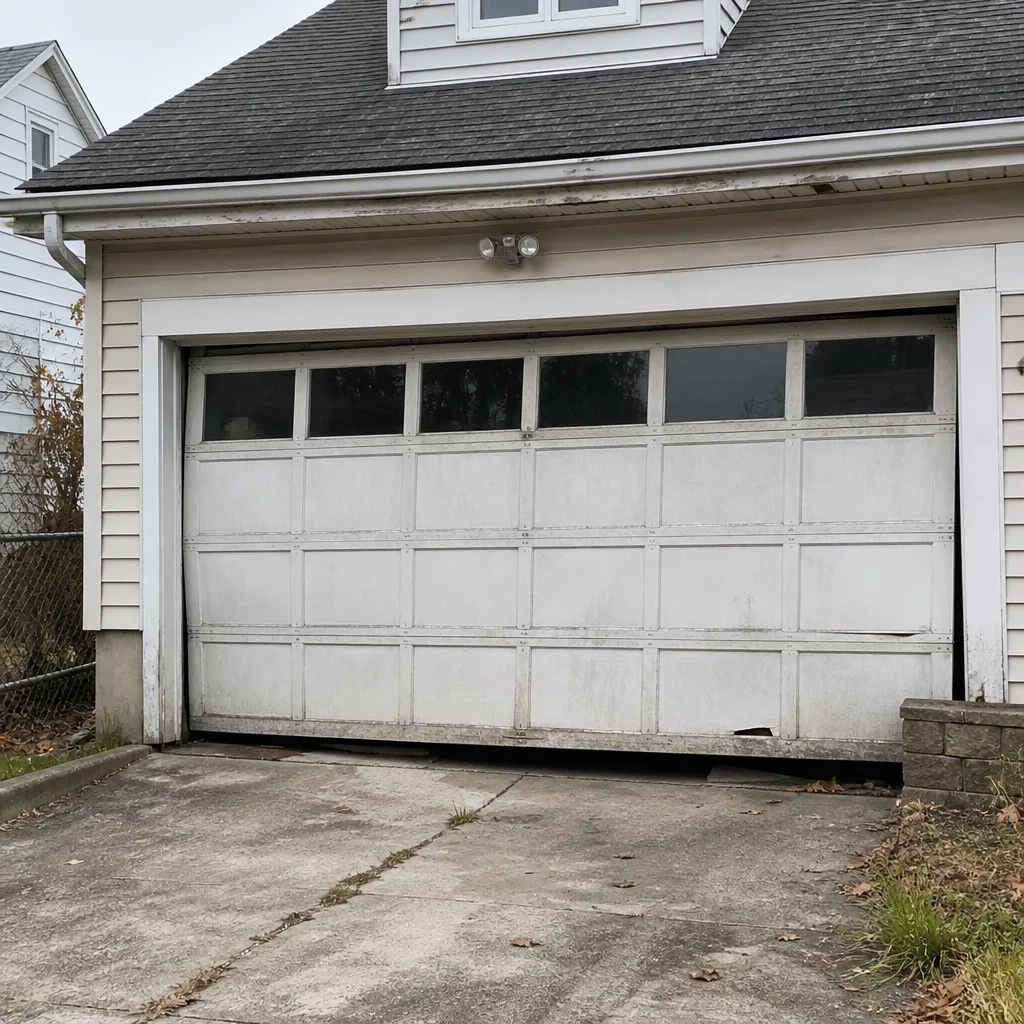 Before
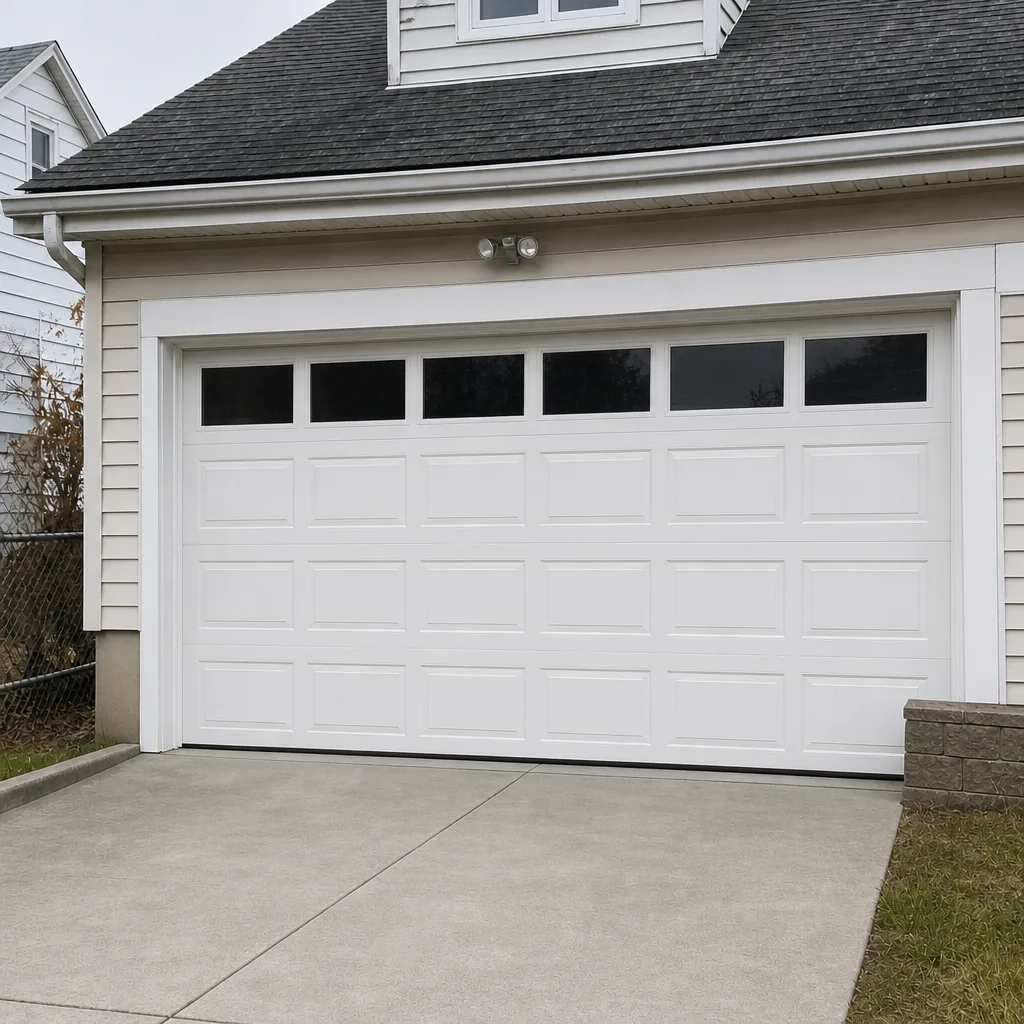 After
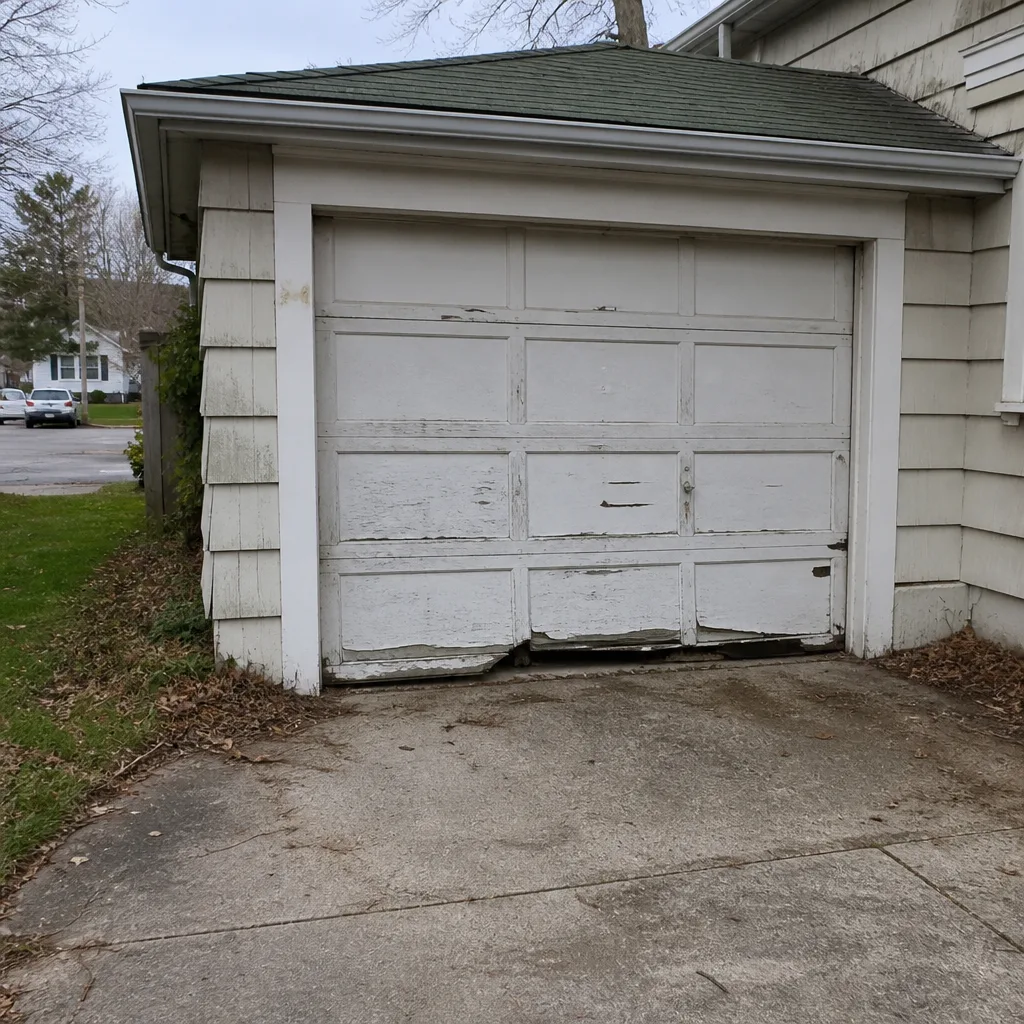 Before
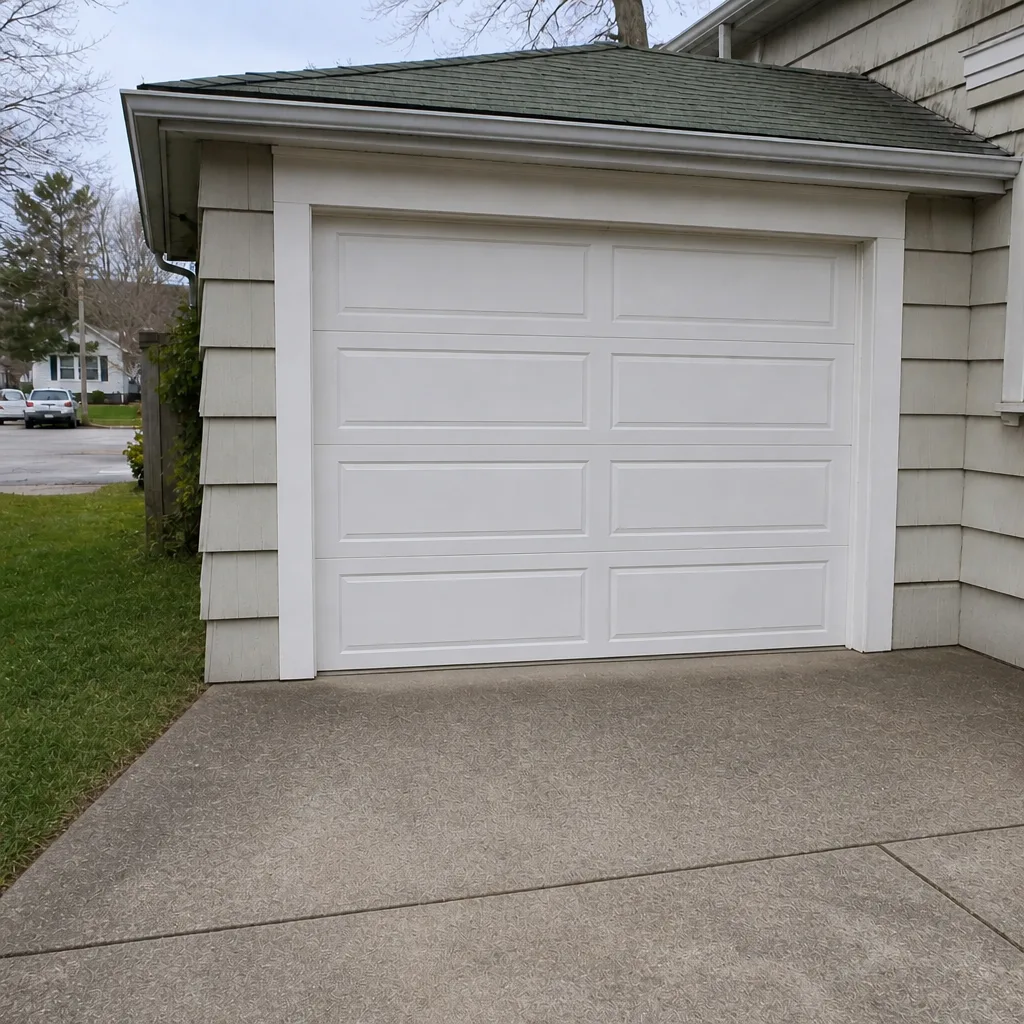 After
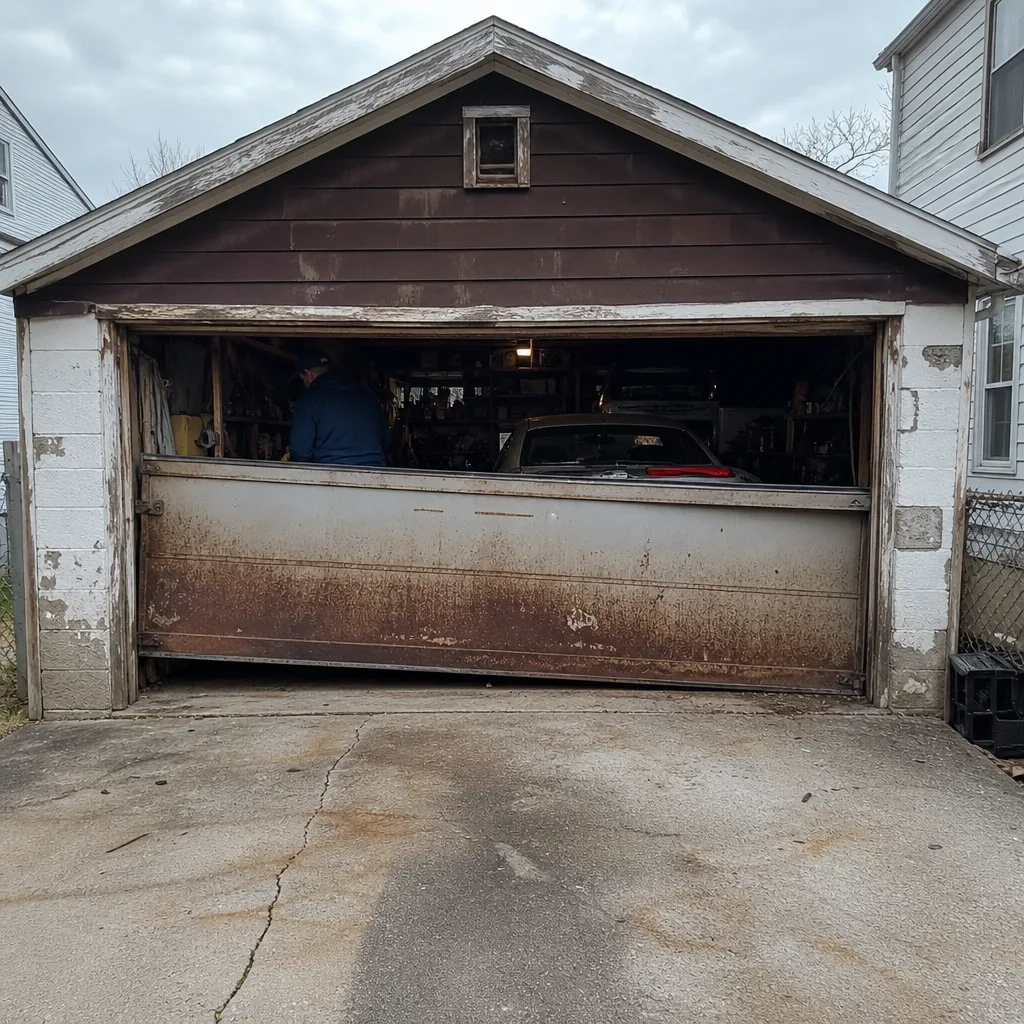 Before
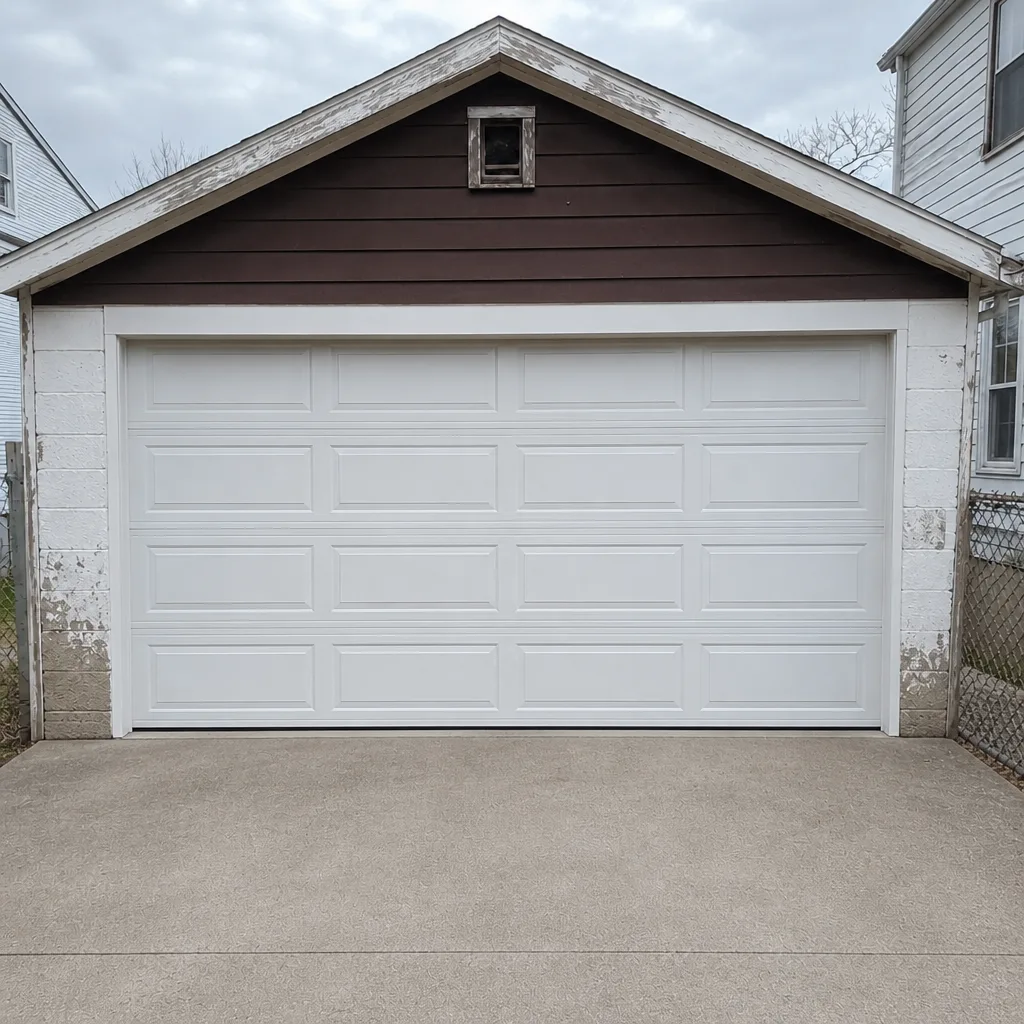 After
When to Call a Professional
Some jobs belong to a trained technician, and it’s worth knowing which ones before something fails. Call a professional for any torsion or extension spring work, for frayed cables, for anything electrical inside the opener housing, and for a door that’s come off its tracks or is visibly out of alignment. Call immediately if a spring has snapped – the door is now dead weight and dangerous to operate. Call the moment a door fails to reverse on contact with an object, because that’s a safety failure. And call if the door comes out of winter noticeably heavier, if it drops when you let go, or if the opener lights flash and stop without explanation. Our technicians have up to 10 years of experience handling all of these in Providence and the surrounding neighborhoods. Garage Door Repair Providence Pros offers free estimates in Providence – call (877) 792-6062.
Frequently Asked Questions
Check the balance and test the safety reverse monthly, lubricate the hinges, rollers, and springs every six months, and inspect cables, seal, and tracks at the first frost and again after the thaw. Springs should be professionally inspected around the seven-to-ten-year mark, even if nothing seems wrong.
Around 10,000 cycles is the design rating, which works out to roughly 14 years at two cycles a day. In practice, most springs fail between seven and ten years, because the freeze-thaw cycle of a Providence winter stresses the metal more than steady use. If your door is approaching that window, plan a spring inspection and call (877) 792-6062 for a free estimate.
No. Standard WD-40 is a solvent and water displacer, not a long-term lubricant. It strips existing grease and attracts dust, so rollers wear faster. Use a purpose-made garage door lubricant on the roller bearing, not WD-40.
The balance test. Disconnect the opener, lift the door to waist height, and let go. If it stays put, the springs are healthy. If it drops, they’re losing tension, and that’s your early warning before a snap.
Yes. Buyers and home inspectors look at garage doors, and a documented service history shows the door has been cared for. Keep receipts, note the dates and what was done, and store the folder with your home records.
No. A torsion spring is under extreme tension, and releasing it incorrectly can cause serious injury. Spring replacement is the one maintenance task that should always go to a trained technician. Call a professional if your spring is failing.
The Bottom Line
The best maintenance schedule is built around how long each part actually lasts, not a generic annual checklist. Check your door’s balance monthly, lubricate with the right product every six months, inspect the springs and seal at the first frost and after the thaw, and expect to replace springs around the seven-to-ten-year mark in Providence’s climate. Record what you’ve had done so the door’s service history follows the house when you sell. And when a job involves springs, cables, or the inside of the opener, leave it to a trained technician. Our technicians have up to 10 years of experience, and we work on every major brand.
Call (877) 792-6062 for a free estimate on any garage door maintenance, repair, or installation in Providence.
Written by the team at Garage Door Repair Providence Pros.