Last updated November 23, 2026
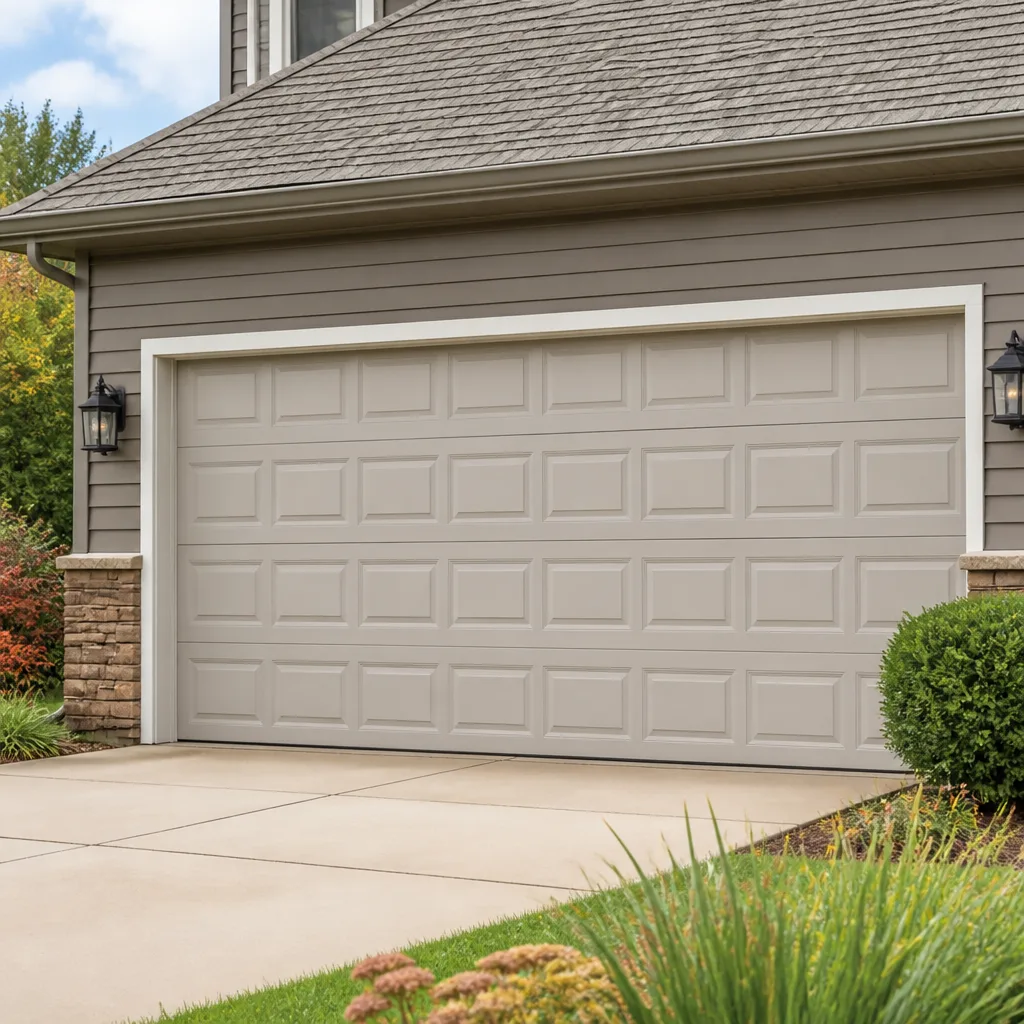 Raised-panel steel
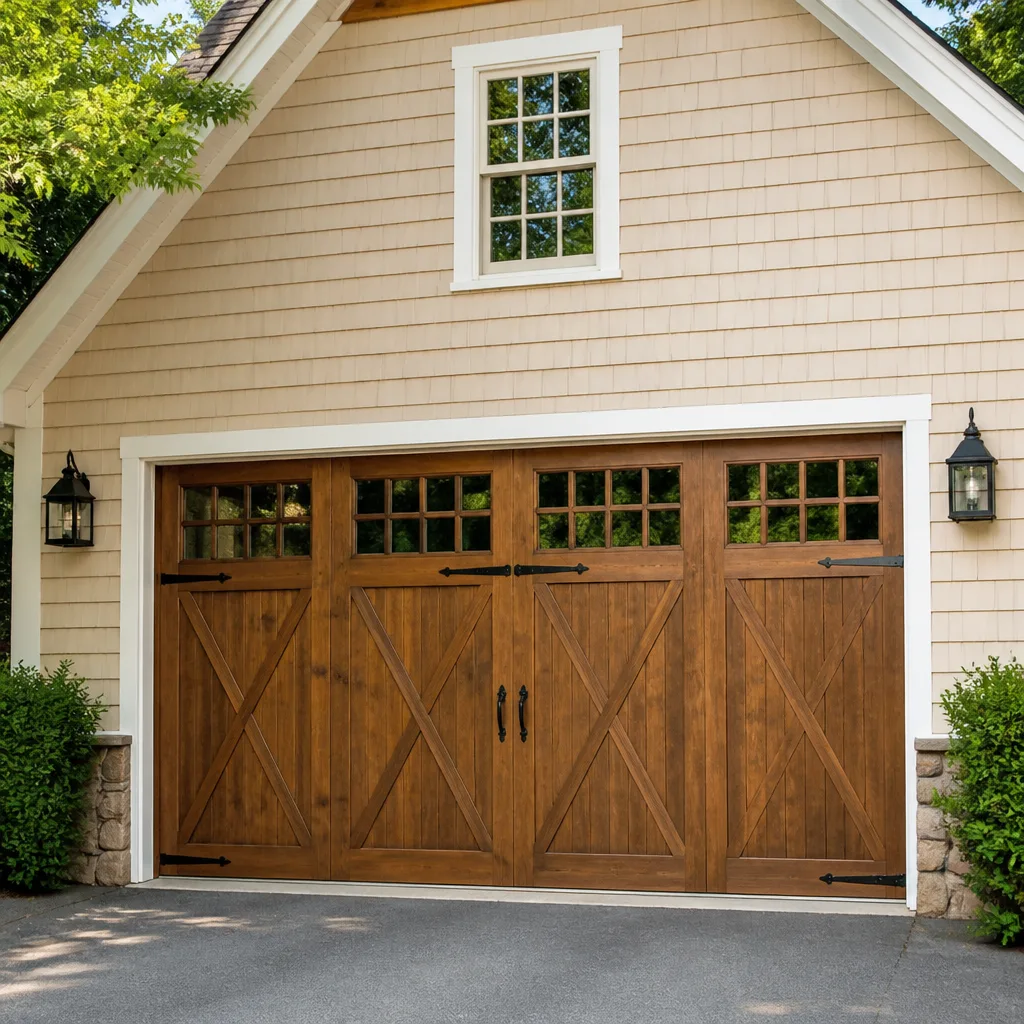 Carriage house
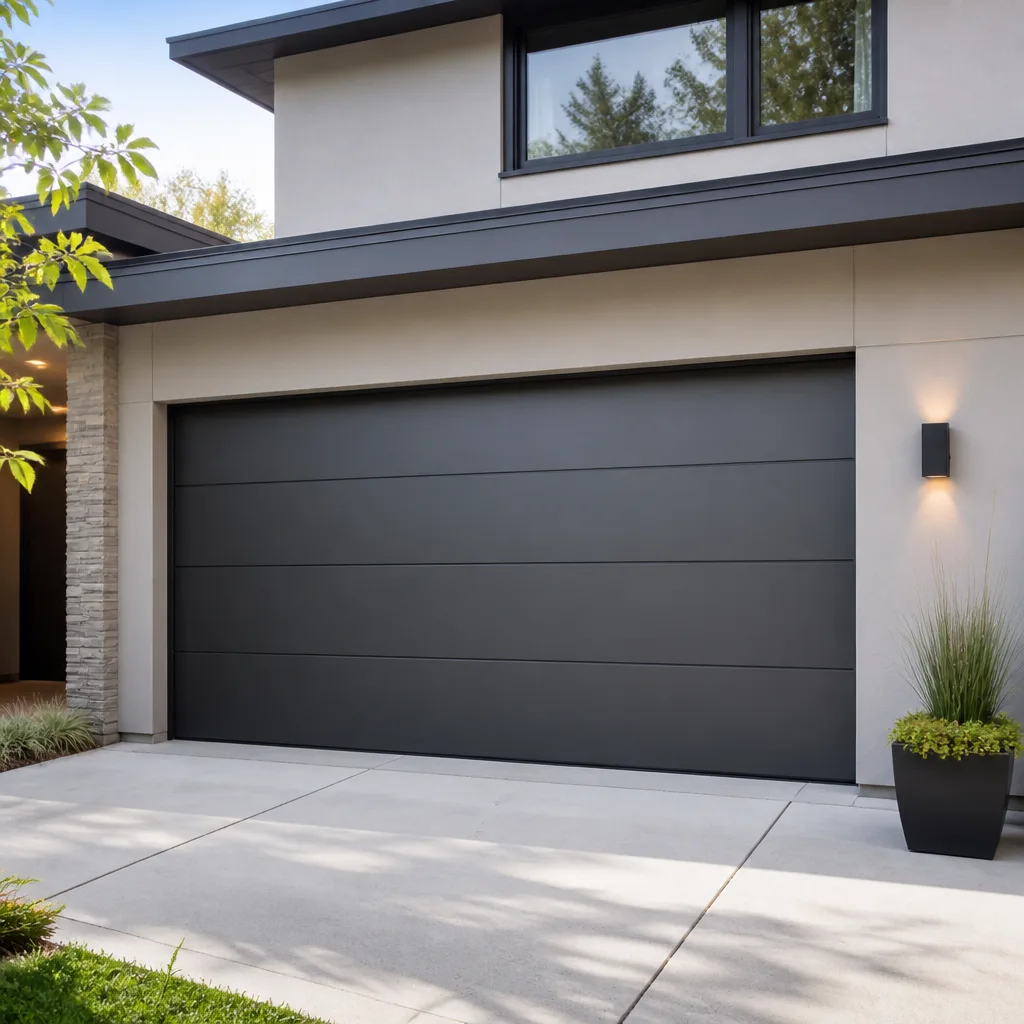 Modern flush
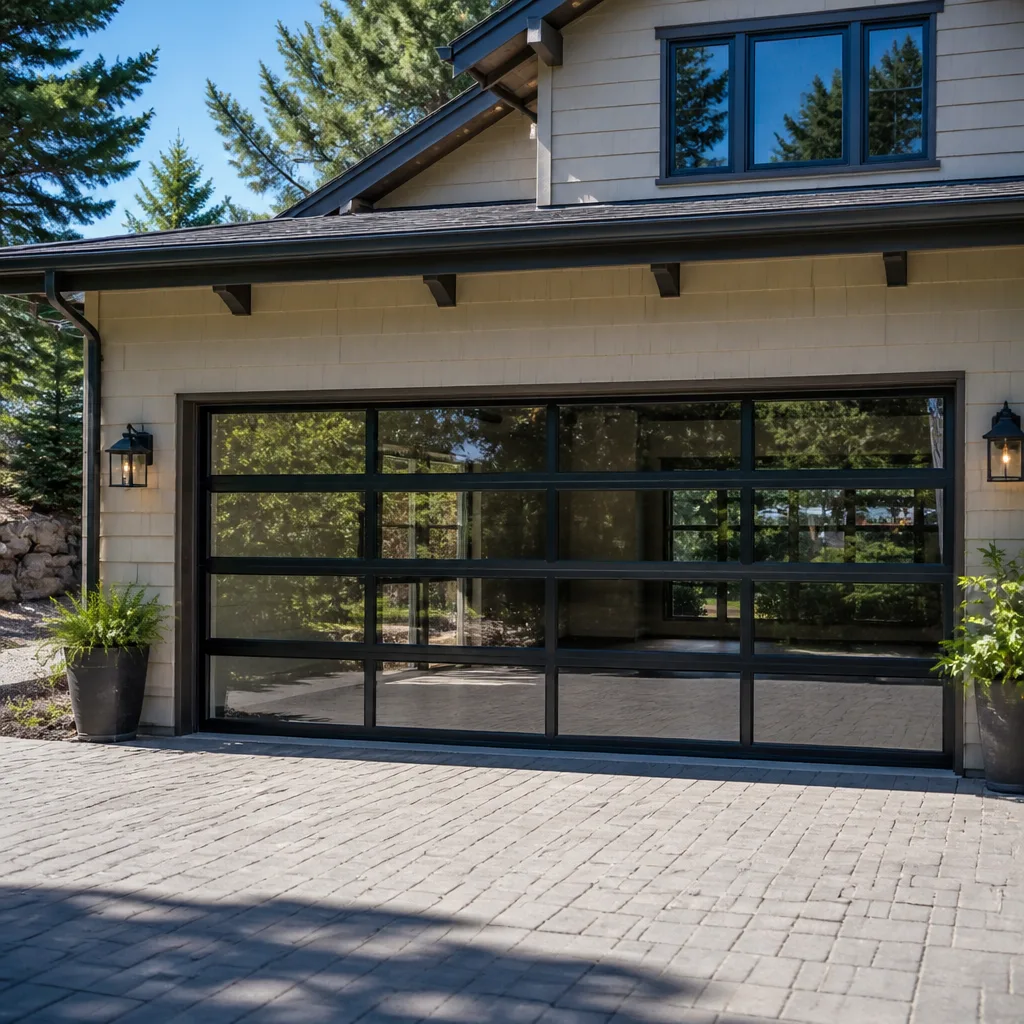 Full-view glass
 LiftMaster openers
 Chamberlain openers
Full 25-point door and opener safety check with every visit - springs, cables, rollers, tracks, and your LiftMaster or Chamberlain opener included
You get a price before we start. It does not change when the pro arrives.
Get your free estimateGarage Door Warning Signs: A Providence Homeowner’s Reference Guide
Most garage doors don’t fail without warning. They complain first. The trouble is that the noise a door makes on a Tuesday in February gets filed away as “old door” and forgotten until a spring lets go. Here’s the distinction that matters: a slow, noisy door is annoying, but a door with a stretched torsion spring, a frayed cable, or a bent track can turn dangerous in a hurry. This guide walks Providence homeowners through the sounds, visual signs, and quick tests that separate “watch it for a week” from “call today.”
Quick Answer
The main warning signs of a failing garage door in Providence are grinding or popping sounds, visible gaps or wear on springs and cables, a door that won’t stay level when opened halfway, and frayed rollers or misaligned tracks. Any sign involving a spring, cable, or a door that drops suddenly means you should stop using it and call a technician the same day. Squeaks, slow rollers, and rattling panels are usually safe to watch for a week or two.
Styles & brands we work with
- Raised-panel steel
- Carriage house
- Modern flush
- Full-view glass
- LiftMaster openers
- Chamberlain openers
Table of Contents
- What Your Garage Door’s Sounds Are Telling You
- Visual Warning Signs on Springs and Cables
- The 60-Second Balance Test
- Warning Signs Unique to Providence Homes
- Roller, Track, and Panel Warning Signs
- When the Opener Is the Problem
- Call Now vs. Watch It vs. Handle It Yourself
- What Repair Typically Costs in Providence
What Your Garage Door’s Sounds Are Telling You
Sounds are the earliest and cheapest diagnostics a door gives you. Each noise points to a specific mechanism, and knowing which is which keeps you from panicking over a squeak or ignoring a pop. Here’s what we listen for when we arrive.
- Grinding: Usually rollers dragging on the track or a dry torsion tube. Grinding that starts suddenly often means a roller bearing has seized. This is a “watch it” sign for a few days, not a lockdown.
- Popping or snapping: This is the sound of a torsion spring under tension. A single loud pop followed by the door feeling too heavy is the classic sign of a spring that has snapped or is about to. Stop using the door.
- Squealing: Metal-on-metal contact, usually from dry hinges, rollers, or the torsion bar sitting in its brackets. Lubrication on the hinges and rollers handles most squeals. Never oil a torsion spring itself.
- Banging: A door that bangs on descent has loose panels, worn rollers, or a track that’s out of alignment. Banging combined with a jerky motion is worth a call.
- Rattling at startup: Often just loose bolts on the opener rail. A quick check with a wrench is fine to try yourself.
Providence homes with older wooden doors tend to amplify every sound because the panels are heavier and less forgiving than steel. If you’ve lived with the noise for years, you may not notice it worsening. Ask someone who visits occasionally whether the door sounds different – fresh ears catch what daily use tunes out.
Visual Warning Signs on Springs and Cables
Springs and cables are the two components that make a garage door dangerous. Springs store the counterweight; cables carry the load if a spring fails. When either shows wear, the safe move is to stop operating the door. Here’s what to look for on a visual check, and what it means.
- A visible gap in a torsion spring: A snapped spring shows a clean two-inch gap in the coil. The door will feel extremely heavy and may crash down. This is a hard stop.
- Rust spots or a chalky coating on the spring: In older Providence houses near the river and in neighborhoods like Fox Point and College Hill, damp air works on steel. Surface rust is normal wear. Deep pitting or flaking on the coils is not.
- Frayed strands on a cable: Cables should look smooth and tight. Broken wire strands at the drum or a cable hanging slack means it’s about to let go. Do not touch it – call a professional.
- Sagging torsion tube: The bar holding the springs should be level. Any droop means the center bracket is fatigued and the whole assembly needs a technician.
- Extension springs without safety cables: Older doors on the East Side and Mount Pleasant often run two extension springs alongside the tracks. If one breaks free, it becomes a projectile. A safety cable through the spring is a straightforward retrofit, but it’s a job for a trained tech.
In our experience, springs give at least one visible warning before failing. A gap in the coil or a frayed cable isn’t a maintenance note. It’s a note to stop using the door until someone qualified looks at it. Springs are under extreme tension, and there’s nothing on a door a homeowner should attempt to loosen or adjust themselves.
The 60-Second Balance Test
The balance test tells you in under a minute whether your springs are still doing their job. It’s a diagnostic only – you’re not adjusting anything, just observing how the door behaves. Do this with no cars in the way and the opener disconnected.
- Close the door fully and pull the emergency release handle on the opener carriage. This disconnects the door from the motor so it moves by hand.
- Lift the door by the bottom panel, going slowly, until it’s about halfway open. Use both hands and keep clear of the springs and cables.
- Let go. A door with healthy springs will hold its position at the halfway point without sinking or rising.
- A door that drops downward on its own has weak or failing springs.
- A door that rolls itself up the track has springs that are set too tight – also a sign of a spring or adjustment problem.
- Reconnect the release when you’re done. If the door dropped, don’t reconnect and don’t run the opener – the motor will fight the weight and burn out.
If the door passes the balance test, the springs are likely fine for now. If it fails, that’s your answer: get the door looked at before the next cold snap. Balance issues almost never fix themselves, and cold Providence nights tighten the springs and shorten the interval before something gives.
Warning Signs Unique to Providence Homes
A Providence garage door faces a specific set of stresses that a desert or deep-winter climate doesn’t produce. The city’s age and geography change which warning signs show up first. Knowing the local patterns helps you know what to check.
- Rust in damp-air patterns: Damp air in Providence’s river-adjacent and older neighborhoods accelerates rust on springs, hinges, and bottom brackets. Surface rust is normal. Pitting or a rough texture on a spring coil is a sign of fatigue.
- Wood rot in older door frames: Many Providence homes have wood jambs and headers that are decades old. Soft spots, bubbling paint, or a jamb that gives when you press on it mean the frame is failing and may not hold the track. This is common in the older housing stock on the East Side and Federal Hill.
- Track misalignment from frost heave: New England winters move the ground. A slab or driveway that shifts can tilt the track slightly out of plumb. The first sign is a door that rubs the track or drifts sideways as it rises. This is a concrete-level issue, not water freezing inside the track.
- Sticking after cold snaps: Wooden doors swell in humidity and shrink in dry winter air. A door that sticks for a few days after a cold front is often a seasonal wood issue rather than a mechanical one.
- Hinge and roller noise after long damp stretches: A month of wet weather, followed by dry heat, makes hinges squeal. This is a lubrication job, not a spring problem.
If you’re not sure whether a wobble is a wood issue or a mechanical one, that’s when a technician’s eye earns its keep. We work on Raynor doors and older steel doors in every corner of the city, and the story a track tells is usually easy to read once it’s inspected. For a full walk-through of what a repair visit covers, see our garage door repair service.
Roller, Track, and Panel Warning Signs
Rollers and tracks are the working parts of the door that get the least attention and cause the most noise. They also give visual warning well before they fail. Here’s what to check on your door this week.
- Rollers: Rollers should spin freely inside their brackets. A roller that wobbles, feels gritty, or has chipped edges is failing. Steel rollers also rust in damp Providence air; nylon rollers age better here.
- Hinges: Hinges hold the door panels to each other. Look for rusted pins, gaps between hinges, or stress cracks in the metal plate. Any of these means the door is racking as it moves.
- Track: Run a hand along the visible inside edge of the track. A bump, a dent, or a slight inward bend stops the rollers and is the most common cause of a jerky door. Loose track brackets – the metal straps that hold the track to the frame – show up as wobble you can see when the door is moving.
- Panels: A bowed panel, a dent near the hinge points, or a panel that’s separating from the frame are all signs the door’s structure is fatigued. Panels that bow near the bottom are especially common on wood doors in humid Providence summers.
- Bottom seal: A worn rubber bottom seal lets rain and pests in, and it can also indicate the door is slightly out of alignment. The seal is cheap to replace, but only after the alignment is checked.
Rollers and tracks are the safest parts of a door for a homeowner to inspect and lubricate. Panels are trickier – replacing a single panel on a Wayne Dalton or Clopay door requires matching the specific panel profile, which is why we ask for the model when you call. New panels are a scheduled job, not an emergency.
When the Opener Is the Problem
Plenty of garage doors get blamed for problems that live in the opener. The door itself may be sound, but the motor, sensors, or remote are failing. Here’s how to tell the difference and what usually fixes it.
- The door reverses right after it starts closing: Almost always a safety sensor. The two small lenses near the bottom of the track need a clear line of sight. Something as small as a leaf or cobweb across one lens will trip it.
- The opener runs but the door doesn’t move: The carriage may be disconnected (check the emergency release) or the drive gear may be stripped. On older LiftMaster and Chamberlain units, a stripped gear is a common diagnosis and a repair rather than a replacement.
- The door works from the wall button but not the remote: Usually the remote, the battery, or the antenna on the opener. A single press-and-hold re-sync handles most of these.
- The door moves in jerks: This is usually the door, not the opener – a worn roller or a track with a bump. The motor is fighting resistance.
- The opener opens a few inches, then stops: This is often a force setting or a binding door. Have the balance test done first before assuming the opener is bad.
Openers from Genie and Chamberlain are built around a simple diagnostic: most run a self-test that flashes error codes on the light. If you’re not sure which code means what, our garage door opener repair page explains the common ones and what to check. In our experience, about a third of “broken opener” calls turn out to be a door problem the opener was masking.
Call Now vs. Watch It vs. Handle It Yourself
The hardest part of any warning sign is deciding what to do about it. Here’s a straight triage so you can act on the sign without either panicking or dismissing it.
Call now (same day)
- A spring that has visibly snapped.
- A frayed or slack cable.
- A door that drops when you let go of it at the halfway point.
- A door that won’t close (home security and weather exposure).
- Any door that has become too heavy to lift by hand.
Watch it for a week
- Occasional squeaking or grinding from hinges or rollers.
- A slow opener that otherwise works consistently.
- Small dents in a panel that don’t affect door travel.
- A bottom seal that’s starting to crack.
- A door that sticks only on the coldest mornings.
Handle it yourself (with safety in mind)
- Cleaning and lubricating hinges, rollers, and the track with a proper silicone or white lithium spray. Never a wet lubricant that collects grit.
- Realigning or cleaning a safety sensor lens on the opener.
- Replacing a remote battery or re-syncing a remote.
- Tightening visible bolts on the opener rail housing (never the springs or cables).
If you take only one rule from this section: spring and cable signs are always “call now,” never “watch it.” We’re serious about that. Torsion springs and cables are under dangerous tension, and there’s no safe DIY fix for either.
What Repair Typically Costs in Providence
Providence garage door repairs run the range you’d expect for a medium New England market. Here are the typical estimates we see. All prices are quoted and agreed before work starts, and the written estimate is what sets the final price. Note that a matched pair of springs costs about twice the single-spring range.
- Torsion spring replacement (one spring): $180 to $340. A matched pair, usually replaced together, is about double.
- Extension spring replacement (one spring): $120 to $260 per pair, plus safety cable retrofit where needed.
- Cable replacement: $150 to $290 per side.
- Roller replacement: $100 to $220 for a full set, depending on roller type.
- Track realignment or bracket repair: $110 to $260.
- Opener repair (motor, gear, or board): $150 to $380, depending on which component failed.
- Opener replacement: $250 to $600 for the unit and labor, quoted after measure.
Cost varies with door type, brand, and how accessible the springs are. A Wayne Dalton or Raynor door with a torsion assembly is a different quote than an older wood door with extension springs. Spring replacement is a same-day repair in most cases; opener replacement and any panel replacement work are scheduled because the parts must be ordered. Call (877) 792-6062 for a free estimate – the price is agreed before any tool comes out of the bag.
Common Mistakes to Avoid
- Ignoring a spring noise because the door still opens. A door can run for a few days on a weakened spring, which is exactly when the risk of a sudden failure is highest. If you hear a popping spring, stop using the door.
- Trying to adjust or loosen a torsion spring yourself. Springs are under hundreds of pounds of stored tension. There’s no safe way to touch them without the right winding bars and training.
- Assuming every grinding noise needs a new door. Most grinding is worn rollers or a track that needs a nudge. A technician diagnoses the actual part before recommending replacement.
- Oil that collects dirt. Motor oil or heavy grease attracts grit and makes grinding worse. A dry silicone or white lithium spray is what most rollers and hinges want.
- Pressing the opener button repeatedly when a door is stuck. The motor fights the binding and can strip its gear or burn out the board. Disconnect the door with the release handle and call.
- Letting wood rot in a frame go unresolved in Providence. Older jambs and headers in the city soften with wet springs and stay soft until the track starts to lean. Surface paint hides the problem longer than you’d expect.
- Skipping the balance test because the door works. A door that passes on the opener can still fail the hand-balance test. That test is the surest early warning you’ve got.
See the difference
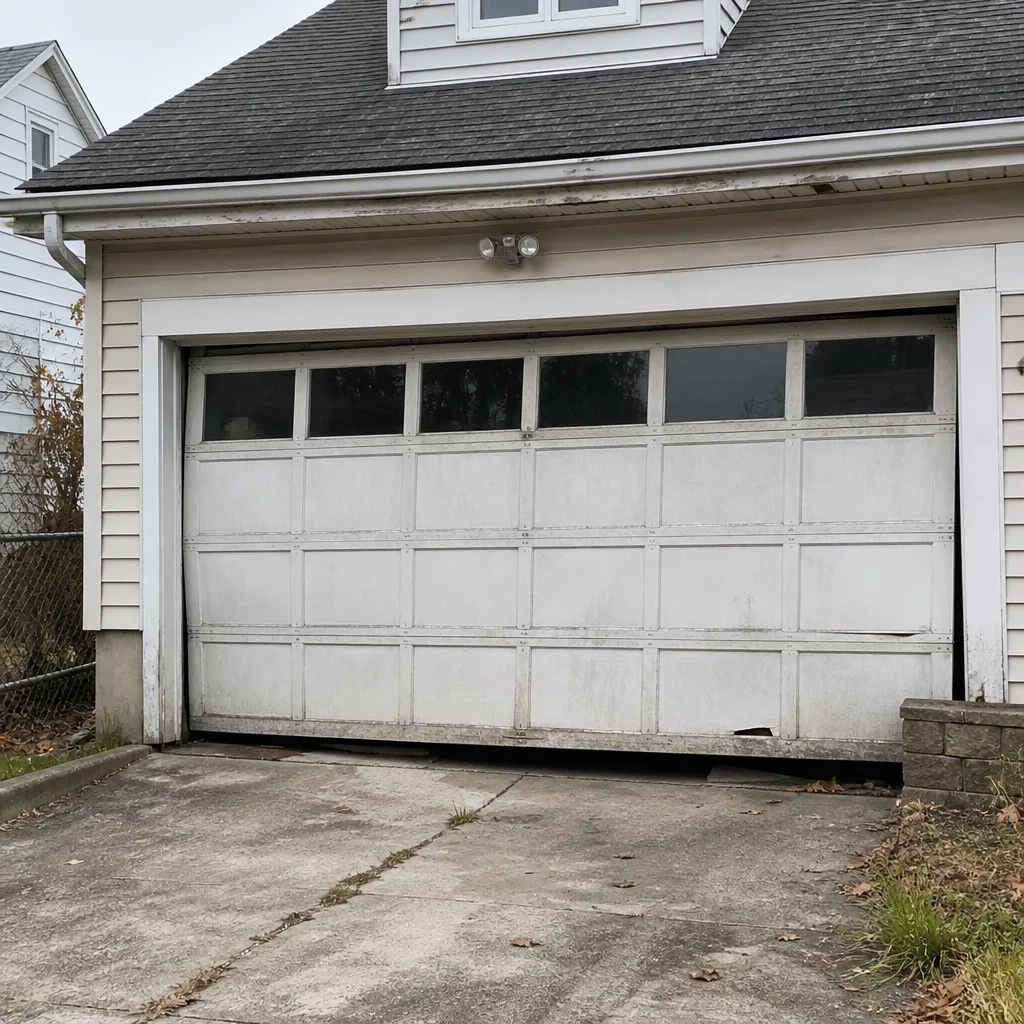 Before
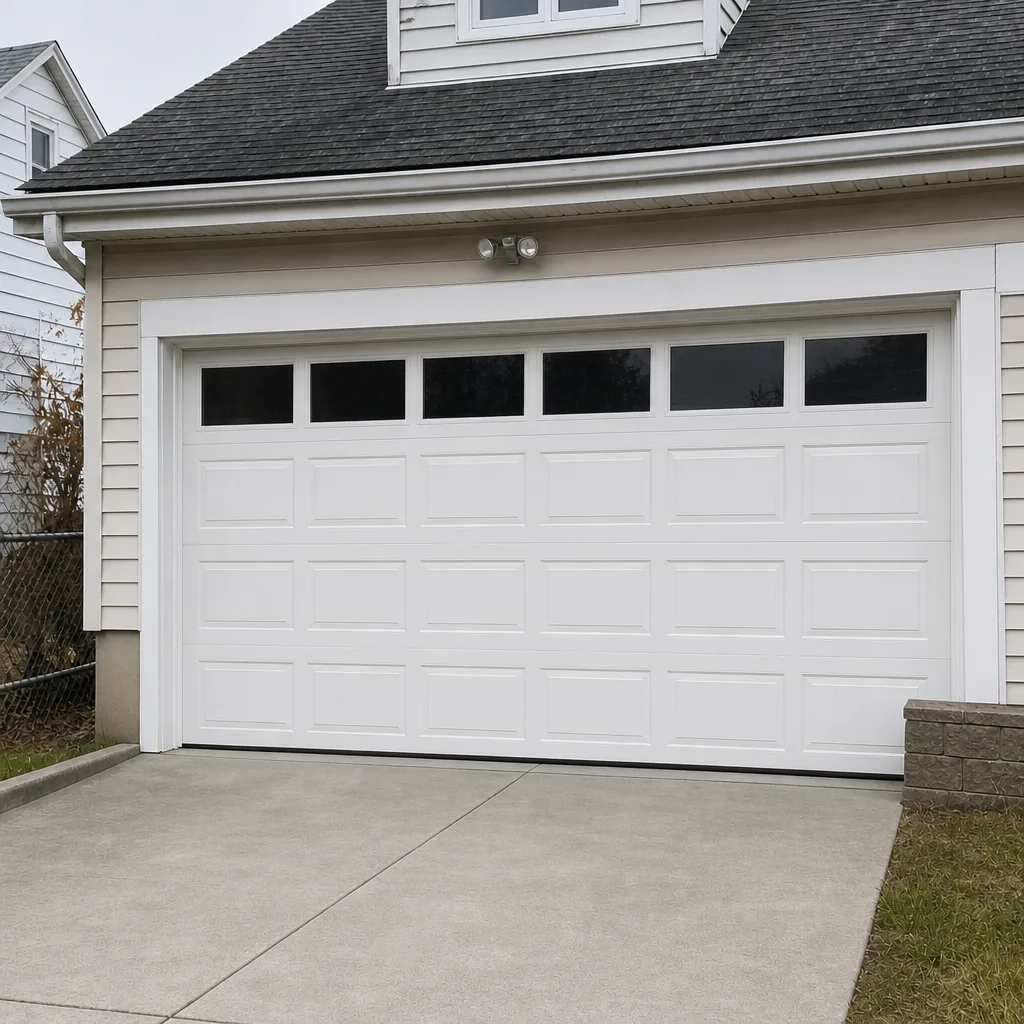 After
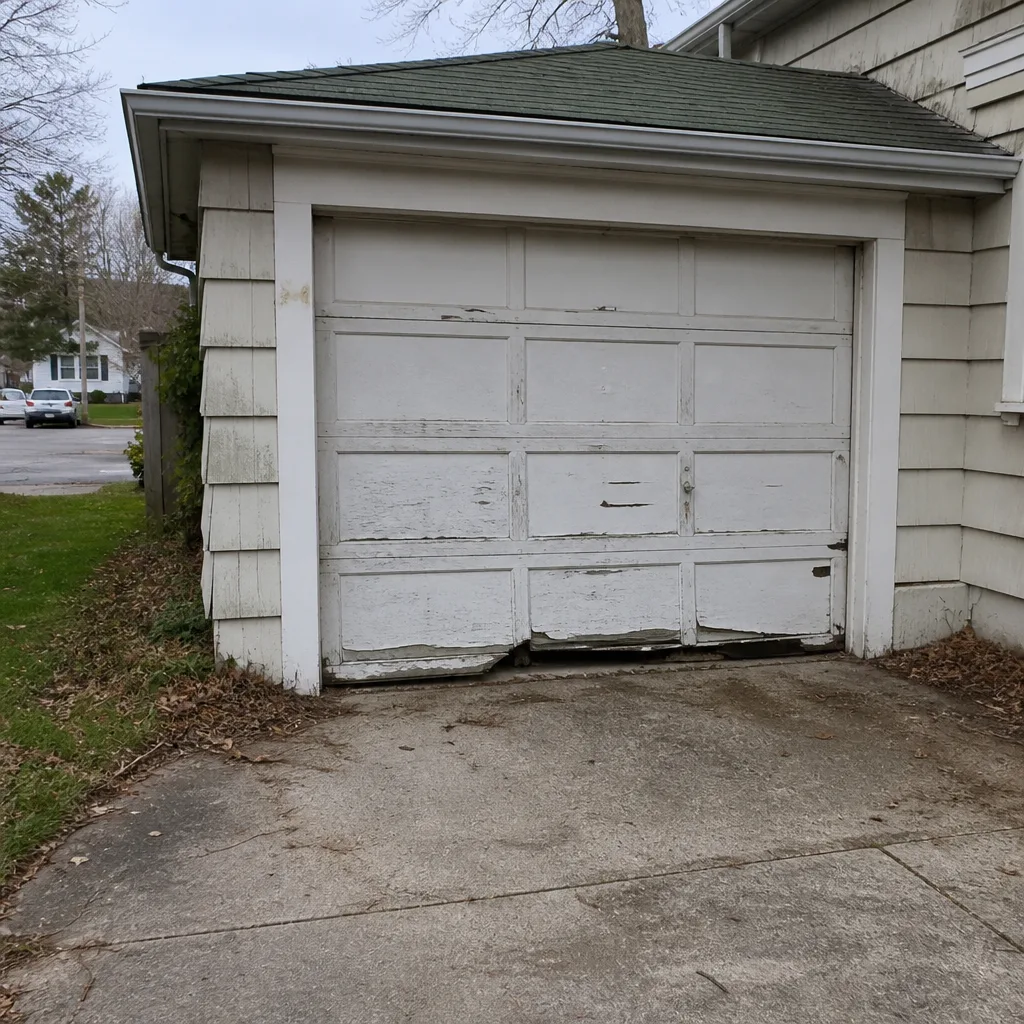 Before
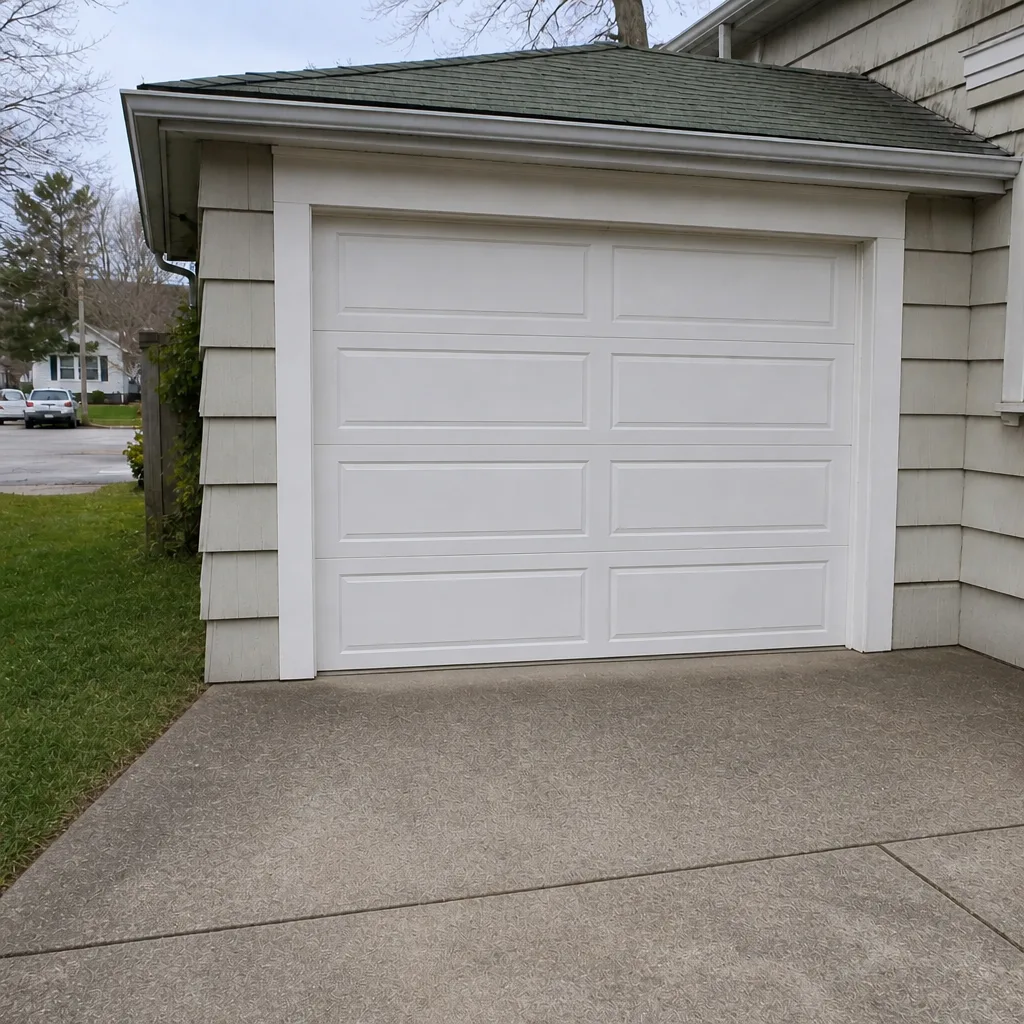 After
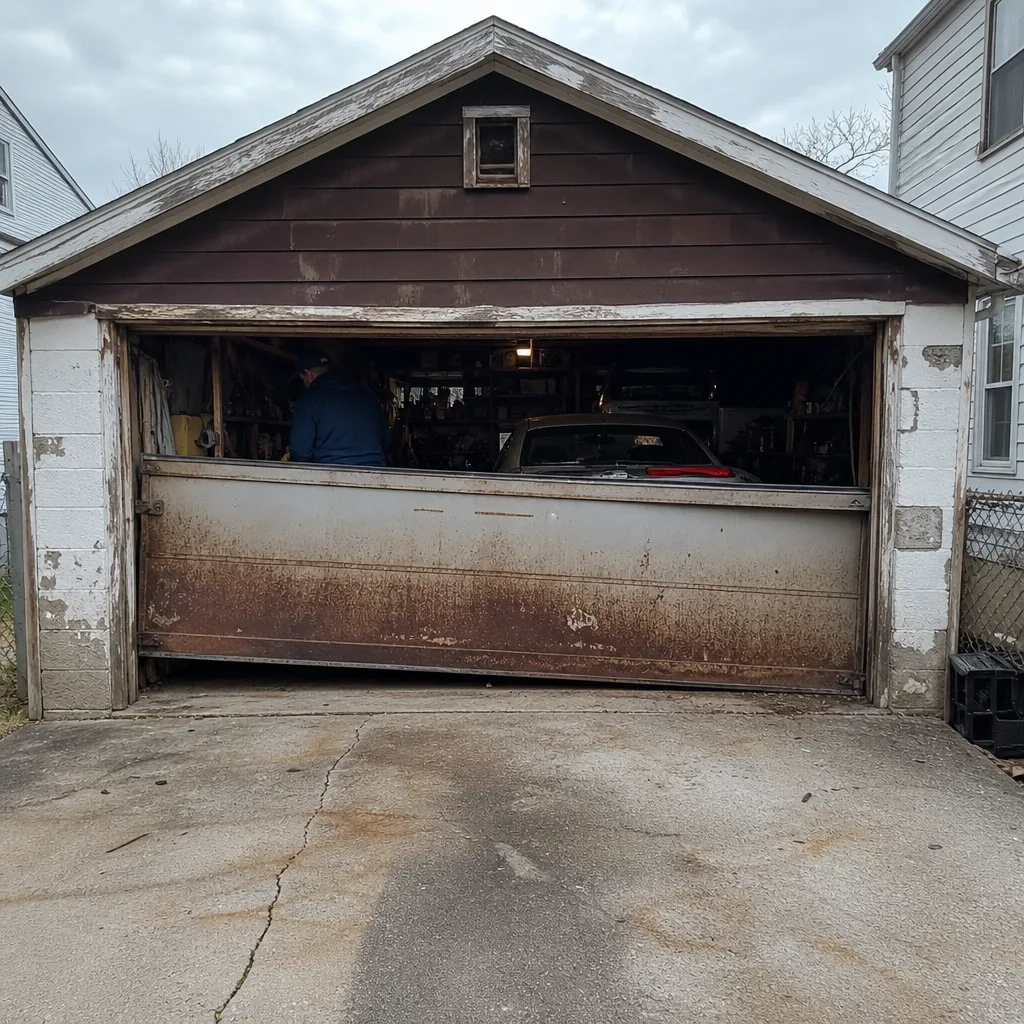 Before
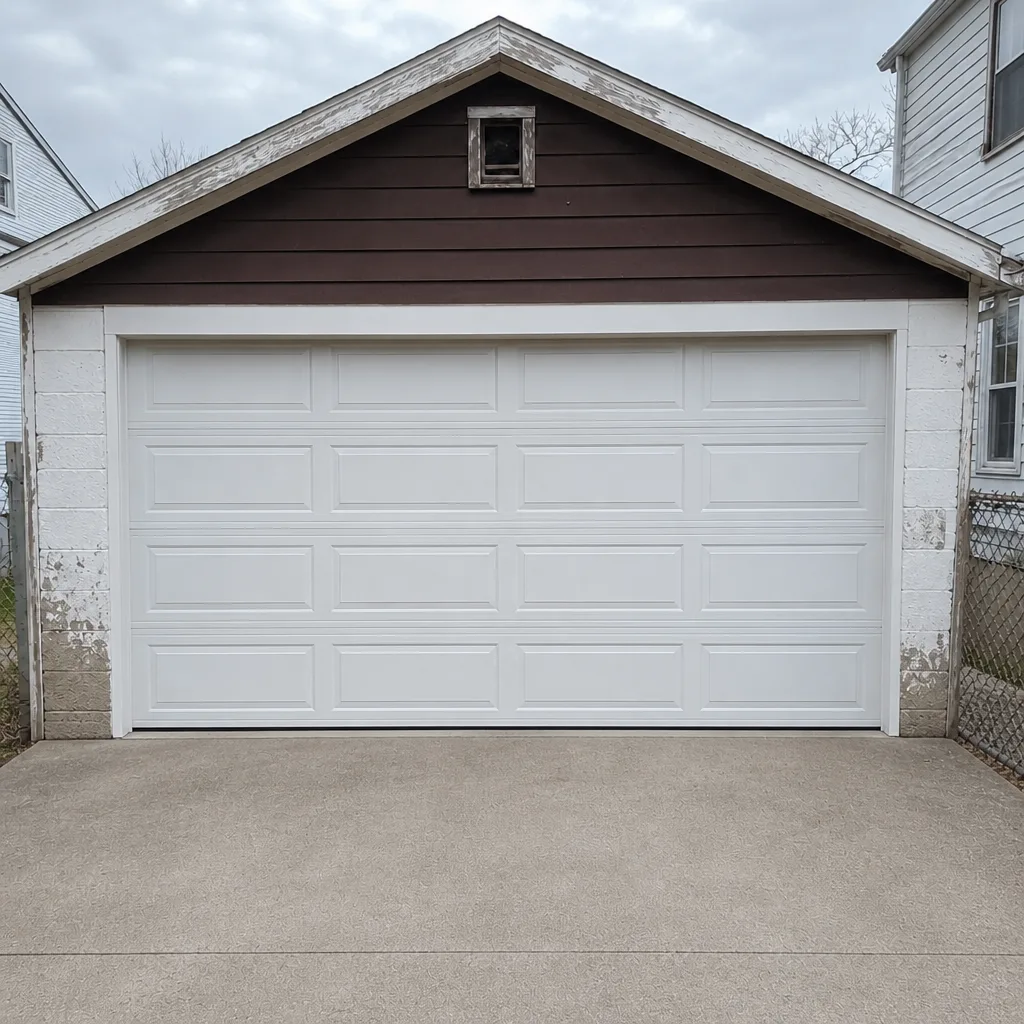 After
When to Call a Professional
Call a professional the moment you see a broken spring, a frayed cable, or a door that drops by itself. Those are safety-level problems, not maintenance. Call for track noise that doesn’t go away within a week, rollers that feel gritty, or a door that’s become hard to open by hand. If an opener runs but the door won’t move, or trips the safety sensors repeatedly despite a clean lens, that’s worth a diagnosis too. We service LiftMaster, Chamberlain, Genie, and Raynor equipment among other major brands, plus every door type in Providence homes, and our technicians have up to 10 years of experience. Garage Door Repair Providence Pros offers free estimates in Providence – call (877) 792-6062. If a door leaves your home unsecured or traps your car, emergency services are available; we can talk through the right next step and book a visit quickly.
Frequently Asked Questions
A broken spring or a frayed cable is the most serious warning sign because it can turn a heavy door into a falling hazard. Stop using the door and call a technician the same day. Signs include a visible gap in a torsion spring, a door that feels extremely heavy on the balance test, or broken wire strands on a cable.
No. A door with one broken spring should not be operated, because the remaining spring is under extra load and the opener is working against a door it isn’t built to lift. This is the same for torsion and extension setups. Call (877) 792-6062 for an emergency visit and leave the door in place.
You need a repair if the door tracks straight, the panels are structurally sound, and the opener works. You need a new door if panels are bowed or cracked in multiple places, the track is bent beyond a simple alignment, or you’ve been quoted a repair that costs most of a new door. In Providence, older wood doors with rot in multiple panels are often better replaced than repaired. For a full replacement scope, see our garage door installation service.
Typical repairs in Providence range from $100 to $380, depending on the part – roller sets and track adjustments run lower, opener and spring work runs higher. The written estimate you receive sets the actual price, and we quote before any work starts. Call (877) 792-6062 – estimates are free.
Technicians are vetted local professionals who are licensed and insured as Rhode Island requires. We can work with your insurer on a claim, and every job is quoted before work begins. For a specific licensing question on your repair, ask us when you call (877) 792-6062.
Check your door’s rollers, springs, cables, and tracks once a season – four times a year is the right cadence for most homes. Do the 60-second balance test each time and once more after the first hard freeze of winter. Any sign of a snap, fray, or drop means a same-day call.
The Bottom Line
A garage door tells you what’s wrong long before it fails. Grinding and squealing are usually noise from parts that need attention; popping and snapping mean stop using the door and call. Use the 60-second balance test to check whether your springs are still carrying the weight, and know the local patterns – damp-air rust, wood rot in older Providence frames, and track wobble from frost heave – that catch doors here first. If a sign is spring, cable, or drop-related, call today. If it’s a squeak or a slow roller, watch it for a week. Either way, don’t ignore a door that’s telling you something.
If you’ve spotted a sign and you’re not sure whether it’s a watch-it or a call-today, reach out. Garage Door Repair Providence Pros diagnoses fast, quotes honestly, and repairs what’s actually wrong rather than recommending a replacement. Call (877) 792-6062 for a free estimate.
Written by the team at Garage Door Repair Providence Pros.