Last updated November 23, 2026
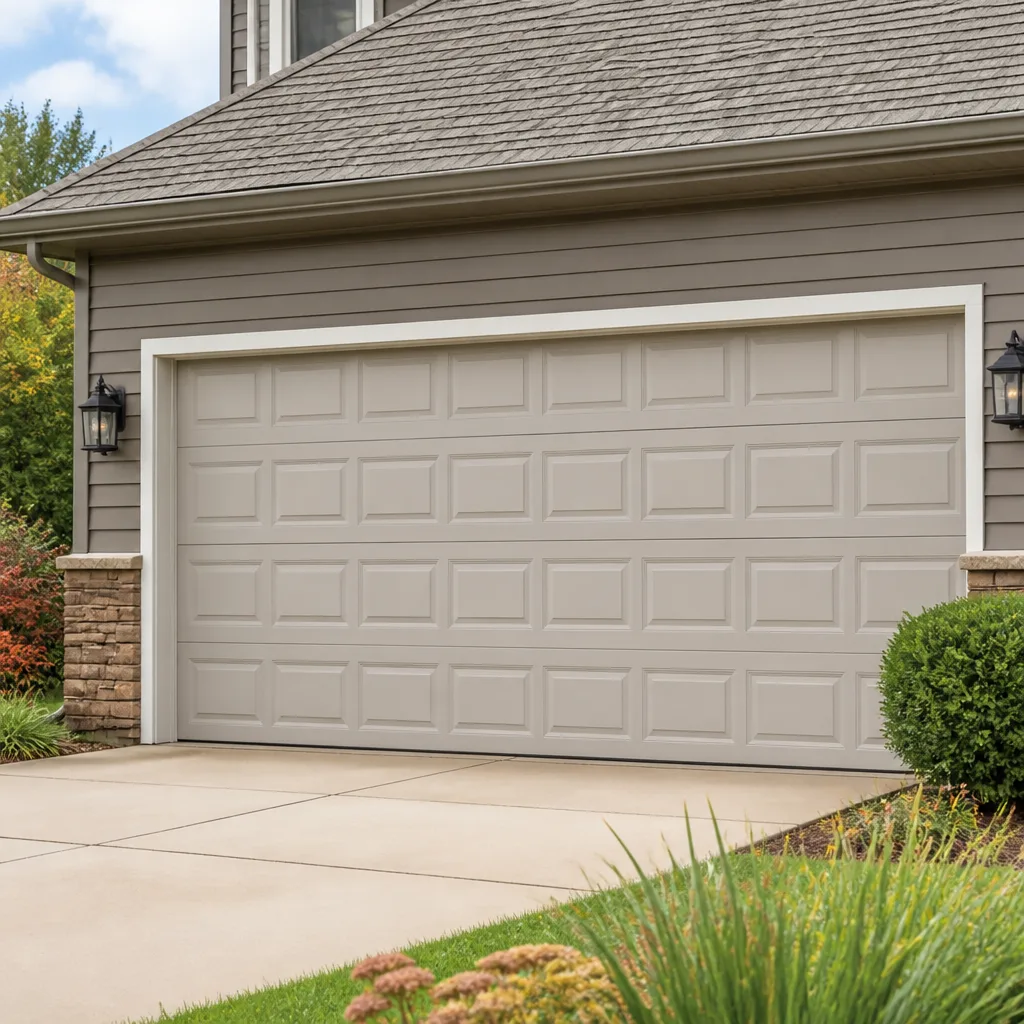 Raised-panel steel
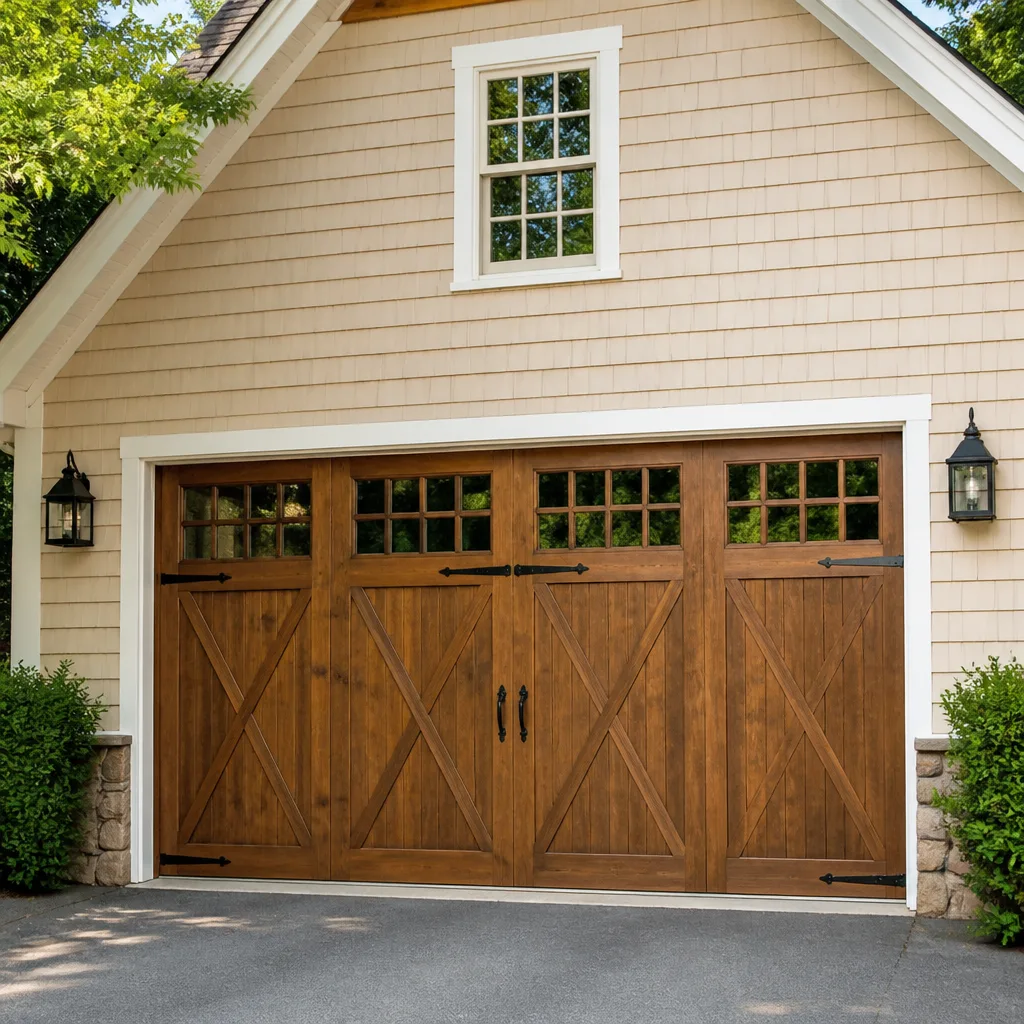 Carriage house
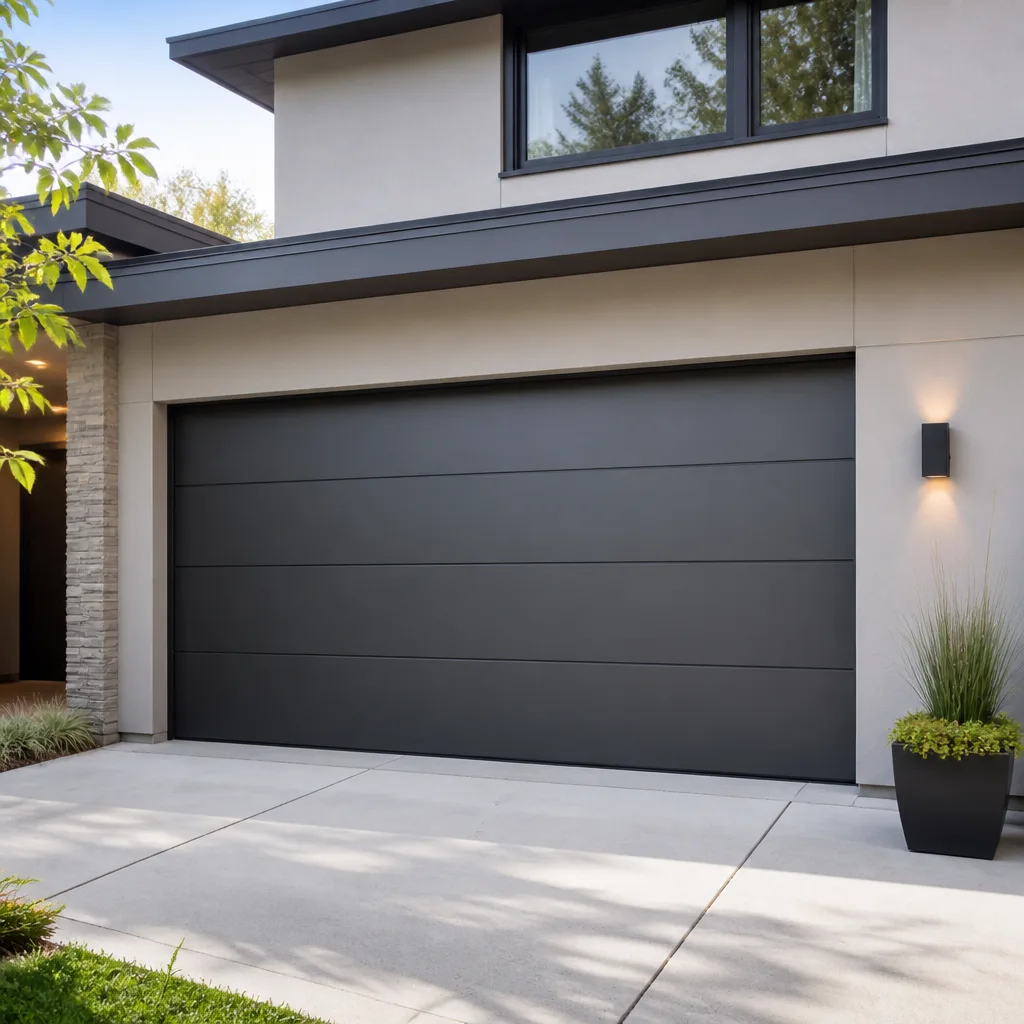 Modern flush
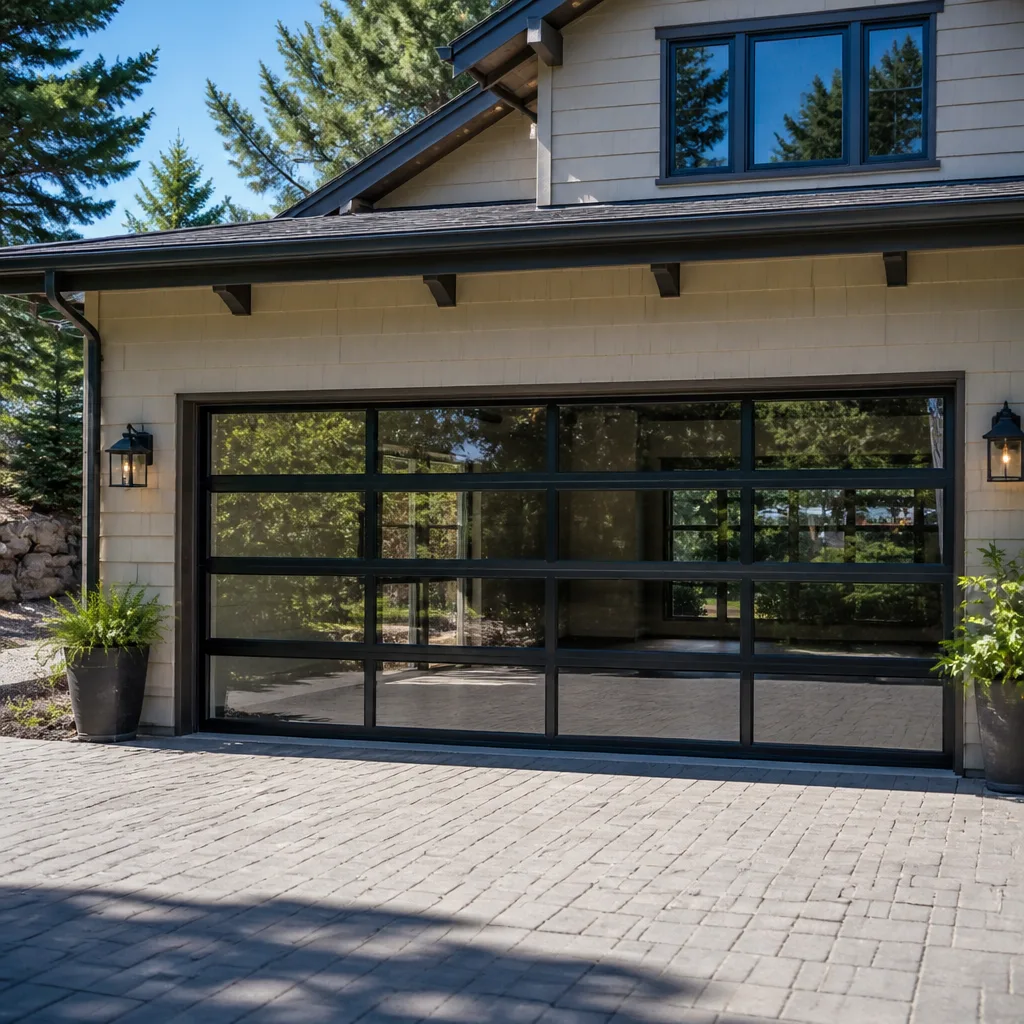 Full-view glass
 LiftMaster openers
 Chamberlain openers
Full 25-point door and opener safety check with every visit - springs, cables, rollers, tracks, and your LiftMaster or Chamberlain opener included
You get a price before we start. It does not change when the pro arrives.
Get your free estimateGarage Door Repair Maintenance Checklist for Providence Homeowners
The number one cause of emergency garage door calls in New England isn’t age. It’s one skipped maintenance step that takes four minutes and costs almost nothing. Most homeowners never lubricate the moving parts, and by the third or fourth winter here, the door is grinding, sticking, or stalling halfway up. A generic ten-point checklist won’t save you, because it doesn’t distinguish the tasks that matter from the ones that can wreck your door or hurt you. This guide is built around the failure points Providence homeowners actually call us about. You’ll learn what to check monthly, what to do seasonally, which popular DIY tasks to skip entirely, and when it’s time to call a trained technician.
Quick Answer
A solid garage door maintenance routine has three tiers: a monthly walk-around and safety check, a seasonal lubrication and seal inspection timed to Providence’s freeze-thaw cycle, and an annual balance and hardware assessment. The single highest-value step is lubricating hinges, rollers, and the torsion spring with a proper garage door lubricant, not WD-40. Anything involving the springs, cables, or the torsion assembly is not homeowner work and belongs with a trained technician.
Styles & brands we work with
- Raised-panel steel
- Carriage house
- Modern flush
- Full-view glass
- LiftMaster openers
- Chamberlain openers
Table of Contents
- Why Providence Winters Are Hard on Your Garage Door
- The Monthly Check: Five Minutes That Prevent Most Breakdowns
- The Lubrication Points That Seize Up Every Providence Winter
- How to Test Spring Health Without Touching the Springs
- Weatherstripping and the Providence Freeze-Thaw Cycle
- A Realistic Task-by-Task Maintenance Schedule
- The DIY Tasks You Should Never Do Yourself
- When to Call a Professional
Why Providence Winters Are Hard on Your Garage Door
A garage door in Providence works harder than one in a milder climate, and it’s not just the cold. It’s the cycle. Freezing nights followed by daytime thaws mean metal expands and contracts repeatedly through the winter, and every seam, seal, and connection takes that movement. Providence’s older housing stock compounds it. Many garages around the city were built decades ago with doors and hardware that have survived plenty of winters already, and the wear shows up in the pivot points, the bottom seal, and the spring tension long before it shows up anywhere obvious.
Then there’s road salt. Plowed streets send salt spray onto the driveway and onto the door’s bottom section, where it collects on hinges and the bottom bracket. Rust creeps into those spot welds and hinge plates faster than you’d expect. A door that sits in an unheated, poorly ventilated garage keeps moisture trapped against the hardware, which is why doors on the East Side and in the older neighborhoods near Federal Hill often show corrosion at the bottom before anywhere else.
What this means for you: the maintenance calendar that works in a warm, dry climate doesn’t map cleanly onto a Providence garage. You need to look at lubrication more often, seals more closely, and hardware for corrosion every year. In our experience, the doors that avoid emergency calls are the ones where the owner watches the moving parts and the bottom seal, not the ones where the owner did the longest checklist.
The Monthly Check: Five Minutes That Prevent Most Breakdowns
Set a reminder for the first of each month. The check is fast, needs no tools beyond a visual pass, and catches the small problems that turn into a stuck car. A door that suddenly reverses, closes on an object, or won’t move at all usually gave a warning weeks earlier that nobody noticed.
- Run the door and listen. You want a steady, even hum. Grinding, squeaking, popping, or a door that shudders at one height means friction or a loose part.
- Check the balance. Disconnect the opener, lift the door to about halfway, and let go. A balanced door holds its position. One that slams up or drops down is out of balance, and that’s an opener problem waiting to happen.
- Test the safety reverse. Put a roll of paper towels or a piece of 2×4 flat under the door and close it. The door should reverse on contact. If it doesn’t, the opener’s force setting or the photo-eye sensor needs attention before someone gets hurt.
- Look at the photo-eye sensors. The two small lenses near the bottom of the tracks should have a steady light on each. A blinking light means an obstruction, a misalignment, or a dirty lens. Wipe them clean and realign them if needed.
- Pull the emergency release. Make sure the red cord works and that the door moves freely by hand when disconnected.
If any of these checks fail, write it down and address it that week. A door that won’t reverse is a genuine safety issue, and a door that’s out of balance puts extra strain on the opener every single time you use it.
The Lubrication Points That Seize Up Every Providence Winter
Here’s the step most homeowners skip: lubrication. And here’s the mistake most of the ones who don’t skip it make: they grab WD-40. WD-40 is a solvent and water displacer, not a lubricant. It cleans and it penetrates, then it evaporates and leaves the metal drier than before. Use a garage door lubricant instead, either a lithium grease or a silicone spray designed for garage door hardware. A lubricant with a bit of body stays on the metal through the cold months.
Where to put it, and where not to:
- Hinges: a small spray at each hinge joint, every hinge up the sides. This is where the majority of winter squeaks and grinding come from.
- Rollers: a drop on the bearing of each roller, not on the roller surface itself. If you have nylon rollers, use a light silicone spray. Steel rollers benefit from a slightly heavier lubricant.
- Track bends: a light coat where the track curves to redirect the door. Don’t grease the straight track surface – that attracts grit and makes a mess.
- The torsion spring: a light spray on the coil is fine. Do not put anything on the spring that would trap moisture or get into the cables.
- The opener rail and chain or belt: follow the manufacturer’s guidance, which generally means light lubrication on the chain and none on the belt.
Do this once in late fall, before the first hard freeze, and again in early spring. A door on a LiftMaster or Chamberlain opener still needs the same hardware lubrication – the opener brand doesn’t change what the hinges and rollers need. If you notice a particular hinge or roller staying stiff after lubrication, that part may be worn and worth replacing before it fails.
How to Test Spring Health Without Touching the Springs
Garage door springs are under enormous tension, and they’re the one component we tell every homeowner never to touch. You don’t need to. You can learn a lot about your spring’s health by looking and listening, which is what you should do instead.
- Watch the door’s travel. A door that lifts slowly, feels heavier than it used to, or stalls at a certain height often has a spring that’s fatigued. It doesn’t have to snap completely to be a problem.
- Look for a visible gap. On a torsion spring, check the coil for a clean break – a distinct gap in the windings. That means the spring has failed and the door is being held by the opener alone, which is dangerous.
- Listen for a bang. When a torsion spring lets go, it makes a sharp report like a firecracker. If you hear that and the door won’t lift, stop using the opener immediately.
- Check the door’s balance using the disconnect, never the springs. Disconnect the opener, lift to halfway, let go. A door that won’t hold position is telling you the springs are no longer doing their job.
What a failing spring looks like before it snaps: a stretched coil, discoloration at the ends, a slight sag, or a door that feels heavier by hand than it used to. Those are signs to call, not signs to investigate further. garage door repair on a spring is a job for a trained technician with the right winding bars and the experience to do it safely.
Weatherstripping and the Providence Freeze-Thaw Cycle
The bottom seal on your door takes more abuse in Providence than most homeowners realize. It’s the rubber or vinyl strip along the bottom edge of the door, and it does two jobs: it seals out weather and it cushions the door as it closes. Providence’s pattern of freezing nights and thawing days cracks seals faster than a climate that stays consistently cold. Water gets into a hairline crack, freezes, expands, and splits the seal a little more each cycle.
Check the bottom seal at least twice a year, and after any stretch of freezing weather. Run your hand along the bottom edge (with the door open and the opener disconnected) and look for:
- Cracks or splits in the rubber.
- A seal that’s hardened and no longer flexible.
- Gaps between the seal and the floor, especially if you can see daylight.
- Torn or missing sections where the seal has pulled away from the door.
Side and top weatherstripping along the door frame matters too. Loose or missing strips let in cold air, snow, and the occasional small animal. A bottom seal replacement is a genuine DIY job for most homeowners and a cheap one at that, but if the door frame or the track is damaged, that’s a repair call. While you’re inspecting, look at the bottom bracket and hinges for rust from road salt and wipe down any corrosion you find. Repairing a small rust spot now is far easier than replacing a hinge later.
A Realistic Task-by-Task Maintenance Schedule
Here’s the schedule we recommend to Providence homeowners, broken down by how often each task needs doing. It’s realistic – you don’t need to do everything every month. The point is to catch the failure points that actually cause emergency calls.
Monthly:
- Run the door and listen for unusual sounds.
- Test the safety reverse with a low object.
- Check the photo-eye sensor lights and wipe the lenses.
- Look at the door’s balance with the opener disconnected.
Seasonally (late fall, early spring, and after any deep freeze):
- Lubricate hinges, rollers, the track bends, and the spring with a garage door lubricant.
- Inspect the bottom seal for cracks and freeze-thaw damage.
- Wipe down or treat any rust on the bottom bracket and hinges.
- Tighten any visibly loose bolts on the hinges and track brackets (by hand, not with a power tool).
Annually:
- Have a technician assess spring tension, cable condition, and overall door balance.
- Check opener force and travel limits against the manufacturer’s recommendation.
- Inspect the full track for bends, loose mounts, and wear.
If you’re not sure whether your opener is set correctly, a quick check by a technician is worth it. We handle garage door opener repair on the brands in most Providence garages, including Chamberlain and Genie units, and it’s usually a matter of adjusting force and travel settings rather than replacing the opener.
The DIY Tasks You Should Never Do Yourself
Some garage door maintenance is safe for a careful homeowner. Some of it can put you in the hospital. The difference usually comes down to whether the task involves stored tension. Springs and cables are under extreme tension, and a mistake can cause serious injury in an instant. Here’s what to skip.
- Replacing or adjusting torsion springs. This is the most dangerous task in the trade. Springs and cables can release stored energy without warning. A trained technician uses the right tools and has the experience to do it safely – that’s a spring repair, not a maintenance step.
- Adjusting or replacing cables. Cables are under tension too, and a snapped cable can whip. This belongs with a professional.
- Realigning or bending track by hand. Track that’s bent or out of alignment needs proper tools, and a bent track can throw the door off balance. Call a technician.
- Adjusting the torsion assembly on your own. Force settings on the opener are fine to adjust per the manual, but the torsion bar and winding assembly are not.
- Replacing the bottom bracket. The bracket at the bottom of the door is under spring load and can snap. Leave it.
- Climbing on ladders to reach the opener or the top of the door if you’re not steady on your feet. A fall from a ladder is a common and preventable injury.
The general rule: if a task involves springs, cables, or a bracket under load, call us. If it’s cleaning, lubricating, testing, or replacing the bottom seal, you can do it. Lubrication, seal inspection, and the monthly safety test are the safe DIY zone. Everything under tension is not.
When to Call a Professional
Some warnings are worth a call right away. If your door won’t open or close at all, if you heard a bang and the door won’t lift, if the door is hanging crooked, or if a cable has visibly snapped, stop using the opener and call a technician. A door that won’t close leaves your home unsecured, and a door that’s being held by the opener alone can drop. Those are the situations where emergency service exists for a reason. A door that’s simply noisy, slow, or slightly stiff is less urgent but still worth getting looked at before it fails.
A few less urgent situations also point to a professional: a spring that looks fatigued, a door that’s out of balance after a DIY attempt, a bottom seal that won’t stay on, or an opener that’s behaving oddly (reversing at random, not completing travel, or running but not moving the door). Those are diagnostic problems where a technician can often tell you in minutes whether you need a repair or a replacement. Garage Door Repair Providence Pros offers free estimates in Providence – call (877) 792-6062. We work on garage door installation when a repair no longer makes sense, but we’ll tell you if a repair is the honest call.
See the difference
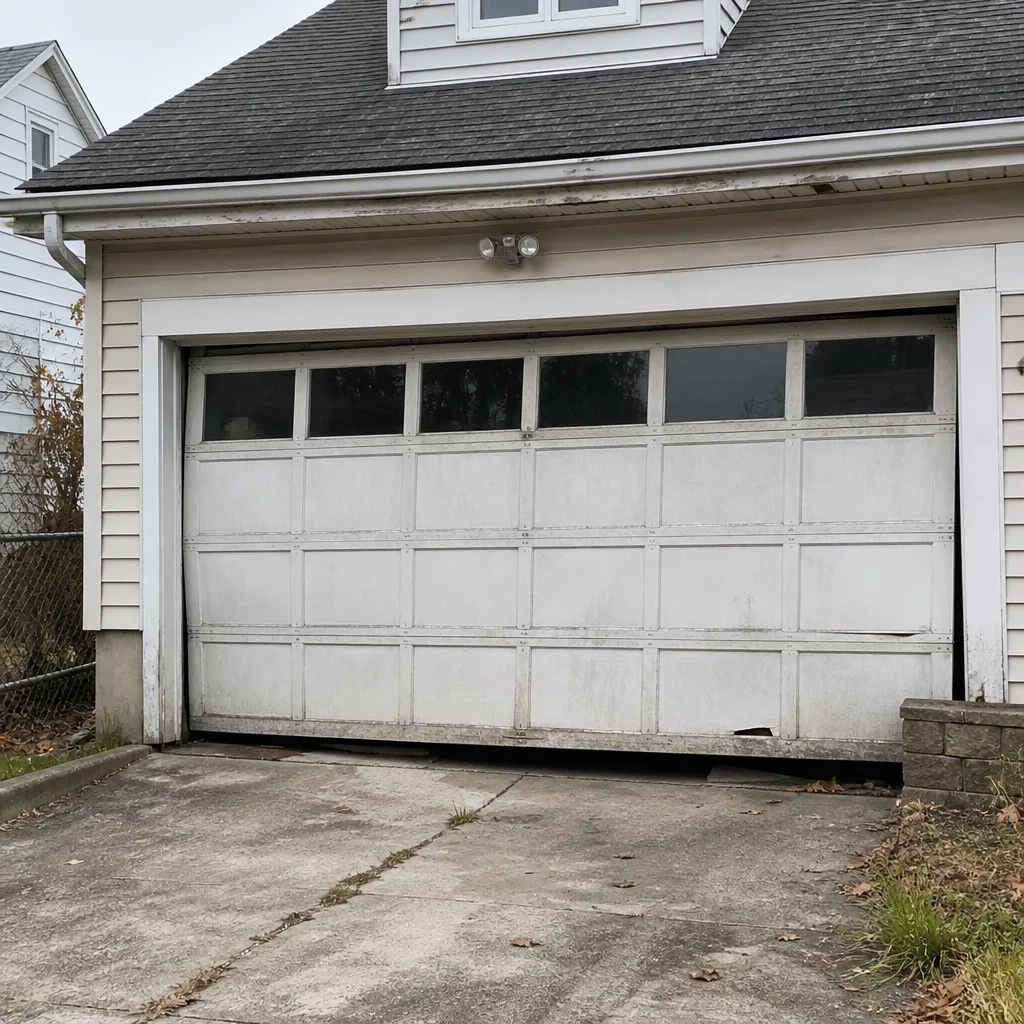 Before
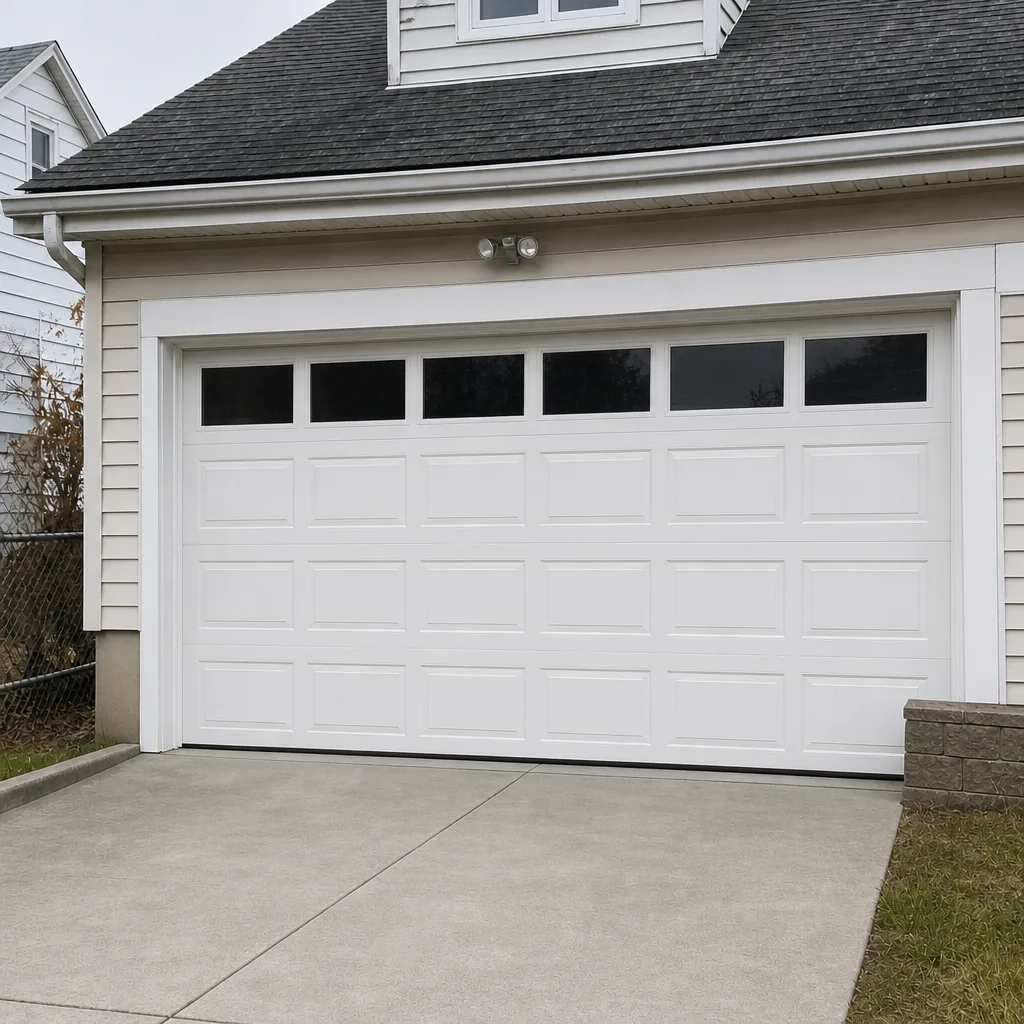 After
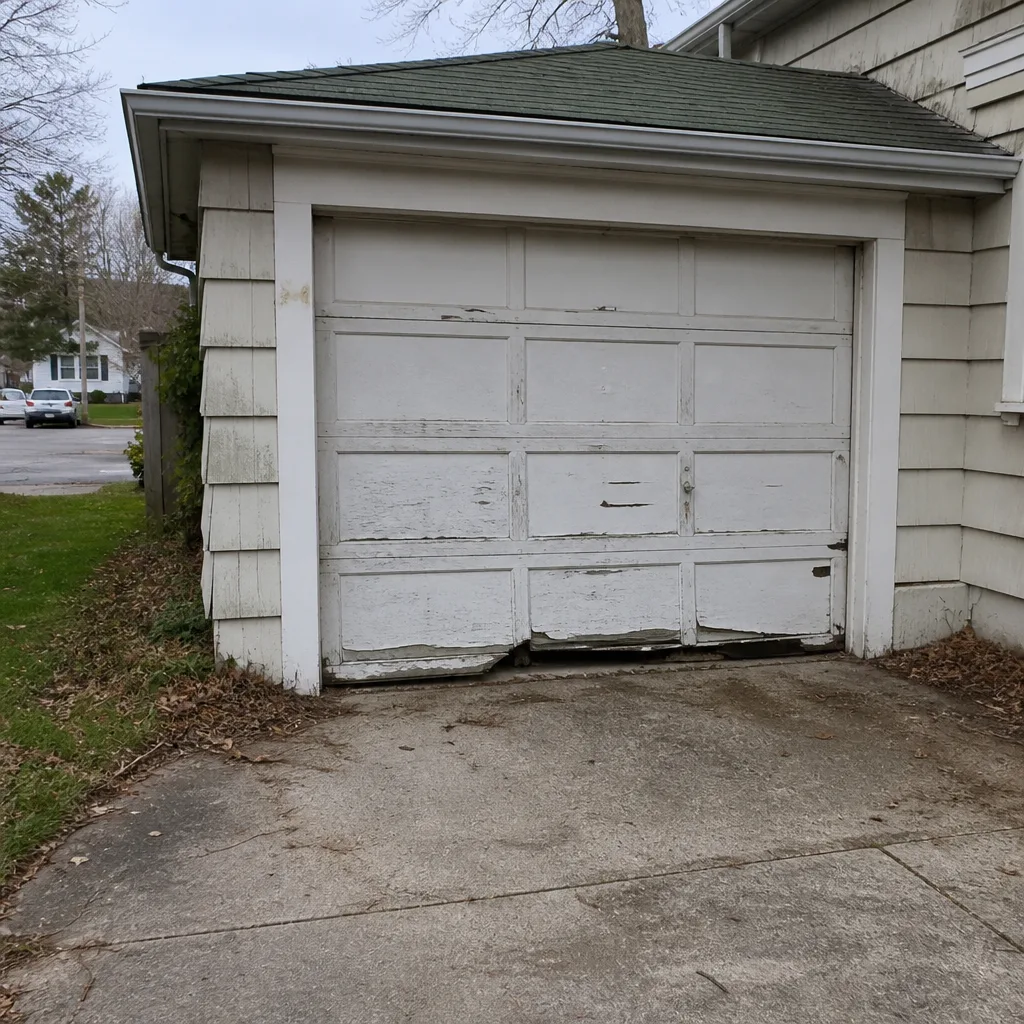 Before
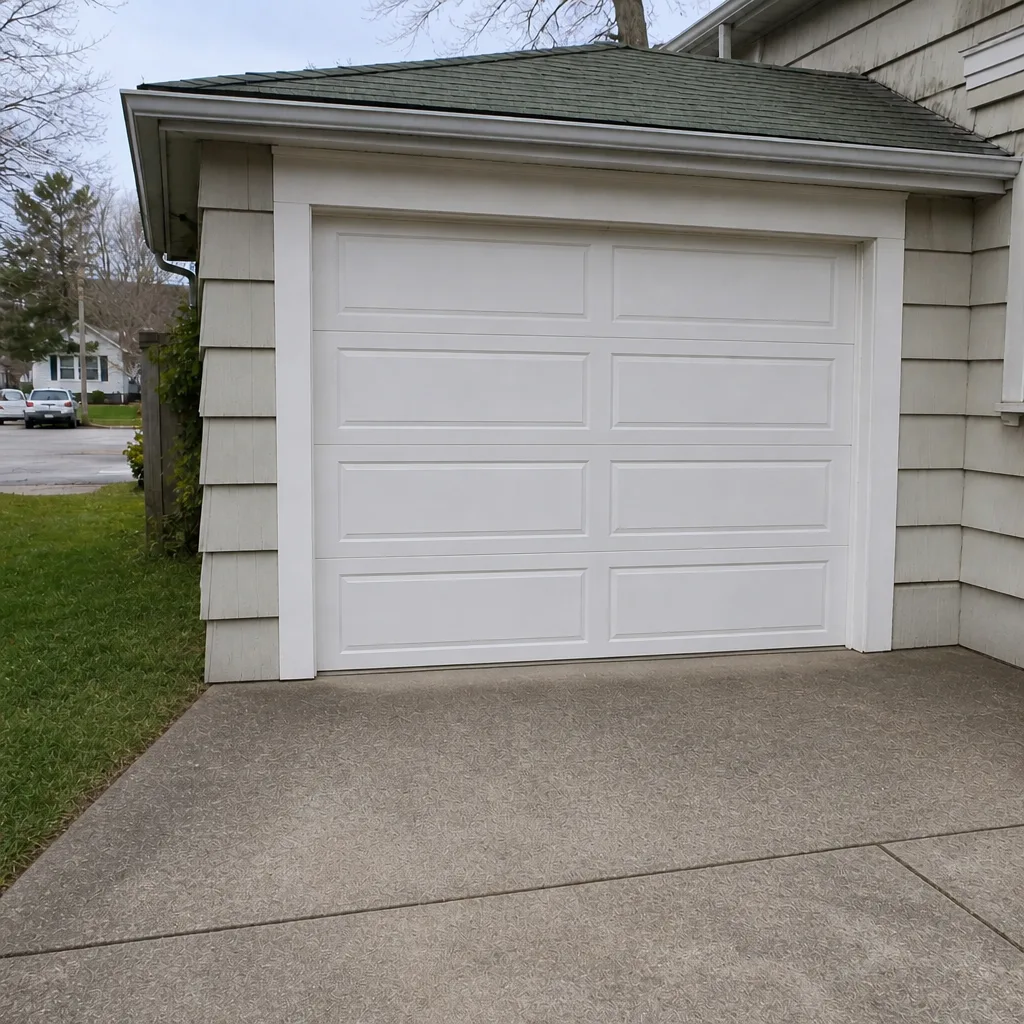 After
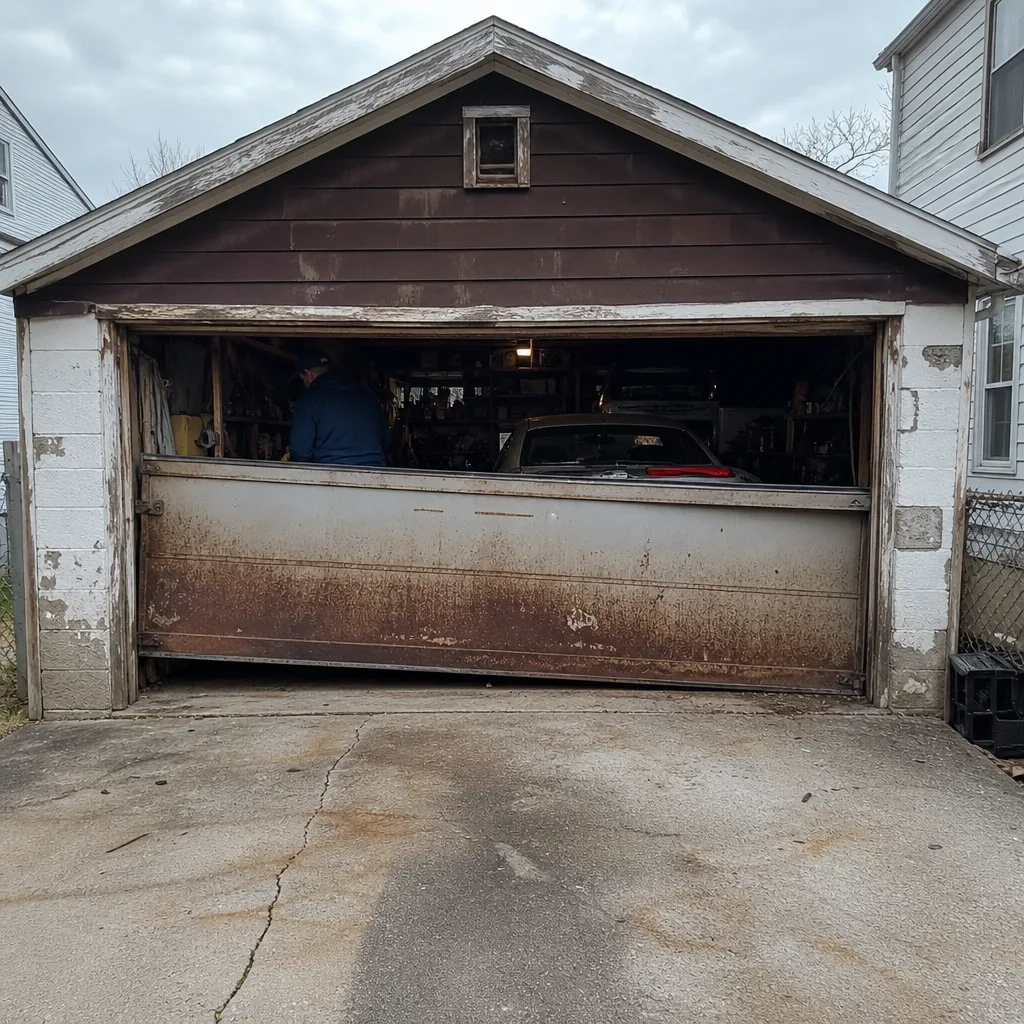 Before
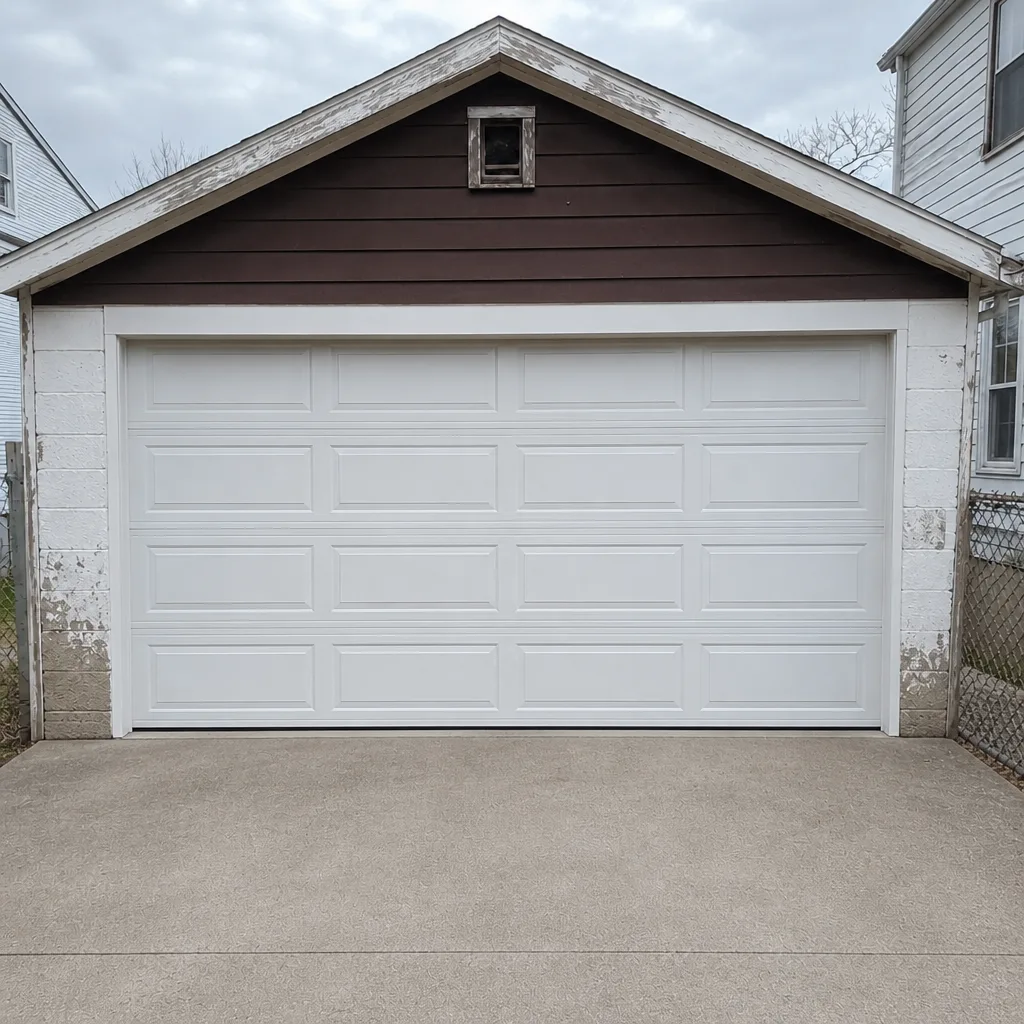 After
Common Mistakes to Avoid
- Using WD-40 as a lubricant. It cleans and displaces water but doesn’t lubricate. Use a garage door lubricant. A door that stays squeaky after lubricating with the wrong product is a door that’s still wearing.
- Skipping the monthly safety reverse test. It takes a minute and it’s the single most important safety check on the whole door. A failed reverse test should be fixed before anyone uses the door again.
- Ignoring the bottom seal through a Providence winter. Freeze-thaw cycles split a worn seal fast. A $20 seal keeps snow, cold air, and pests out; a split one lets them all in.
- Fiddling with the springs to “check” them. If you think the spring is bad, watch and listen. Don’t put a tool to it. A spring that lets go while you’re near it can injure you badly.
- Forcing a stuck door with the opener. If the door won’t move by hand, the opener shouldn’t be pushing it. Forcing it burns out the opener motor and can bend the track.
- Overlooking rust from road salt. Plowed streets send salt onto the bottom of the door. Wipe down hinges and the bottom bracket, and treat rust early before it eats the hinge plate.
- Skipping the annual assessment. The parts you can’t see – spring wear, cable fraying, track mount loosening – are the ones that fail. A once-a-year look by a technician catches them.
Frequently Asked Questions
Lubricating the hinges, rollers, track bends, and spring with a proper garage door lubricant, done in late fall and again in early spring. This one step prevents most of the wear and noise that lead to bigger repairs. It takes four minutes and costs very little. Call (877) 792-6062 if you’d rather have a technician do it.
You can test the door’s balance, but you should never touch the springs or cables themselves. Disconnect the opener, lift the door to halfway, and let go. If the door doesn’t hold its position, the springs are fatigued and you should call a technician. A spring under tension can release without warning and cause serious injury – that’s the one task to always leave to a professional.
At least twice a year, and after any stretch of freezing weather. The freeze-thaw cycle here cracks seals faster than in milder climates. Check the bottom seal for cracks, splits, and gaps where you can see daylight, and replace it when it hardens or tears. It’s an inexpensive DIY job that keeps cold air and pests out of the garage.
Typical repair ranges vary by job. A spring repair for one spring usually runs in the $180 to $340 range, and a matched pair is usually replaced together, so a pair runs about twice that. Opener repairs, seal replacement, and track work each have their own ranges. The written estimate sets the final price, and the price is quoted and agreed before any work starts. Call (877) 792-6062 for an exact quote – estimates are free.
Often, yes. A door that won’t close leaves your home unsecured, so we treat it as an emergency call and offer same-day service where we can fit it in. The sooner you call, the sooner it gets fixed. Call (877) 792-6062 for a free estimate.
The local pro is licensed and insured as Rhode Island requires, and our technicians have up to 10 years of experience. We service the brands in most Providence garages, including Chamberlain, Genie, Clopay, and Amarr, so we work on your brand rather than steering you toward a replacement. Call (877) 792-6062 for a free estimate.
Contact
If you’re ready to get ahead of a failing part, or you’d like a technician to look over your door before the next cold snap, we’re here. Garage Door Repair Providence Pros handles repair, opener repair, spring repair, and new door installation across Providence. Call (877) 792-6062 for a free estimate. We’ll quote and agree the price before any work starts, and we’ll give you the honest call on repair versus replacement.
Written by the team at Garage Door Repair Providence Pros.